Highlights
- Microsoft internally feared becoming overly dependent on OpenAI as early as 2022, newly revealed courtroom testimony shows.
- CEO Satya Nadella expressed concern that Microsoft could become strategically subordinate to OpenAI, comparing the situation to the historic IBM–Microsoft power shift.
- Microsoft has now committed more than $100 billion to OpenAI through investments, infrastructure, and hosting support.
- The partnership helped accelerate Microsoft’s AI infrastructure growth, but OpenAI’s expanding independence has reshaped the relationship.
- Microsoft is increasingly building its own AI models while partnering with multiple competitors to reduce reliance on OpenAI.
Key Takeaways
- Microsoft saw dependency risk early: Leadership recognized the strategic danger of enabling a partner that could eventually outgrow its influence.
- OpenAI evolved from partner to competitor: Microsoft now openly acknowledges competitive overlap in AI products and services.
- AI infrastructure delivered strategic gains: Supporting OpenAI accelerated Microsoft’s cloud and supercomputing capabilities.
- Diversification becomes essential: Microsoft is broadening its AI ecosystem through internal development and rival partnerships.
- The AI alliance is entering a new phase: Cooperation remains valuable, but competitive tensions are increasingly visible.
Core Background
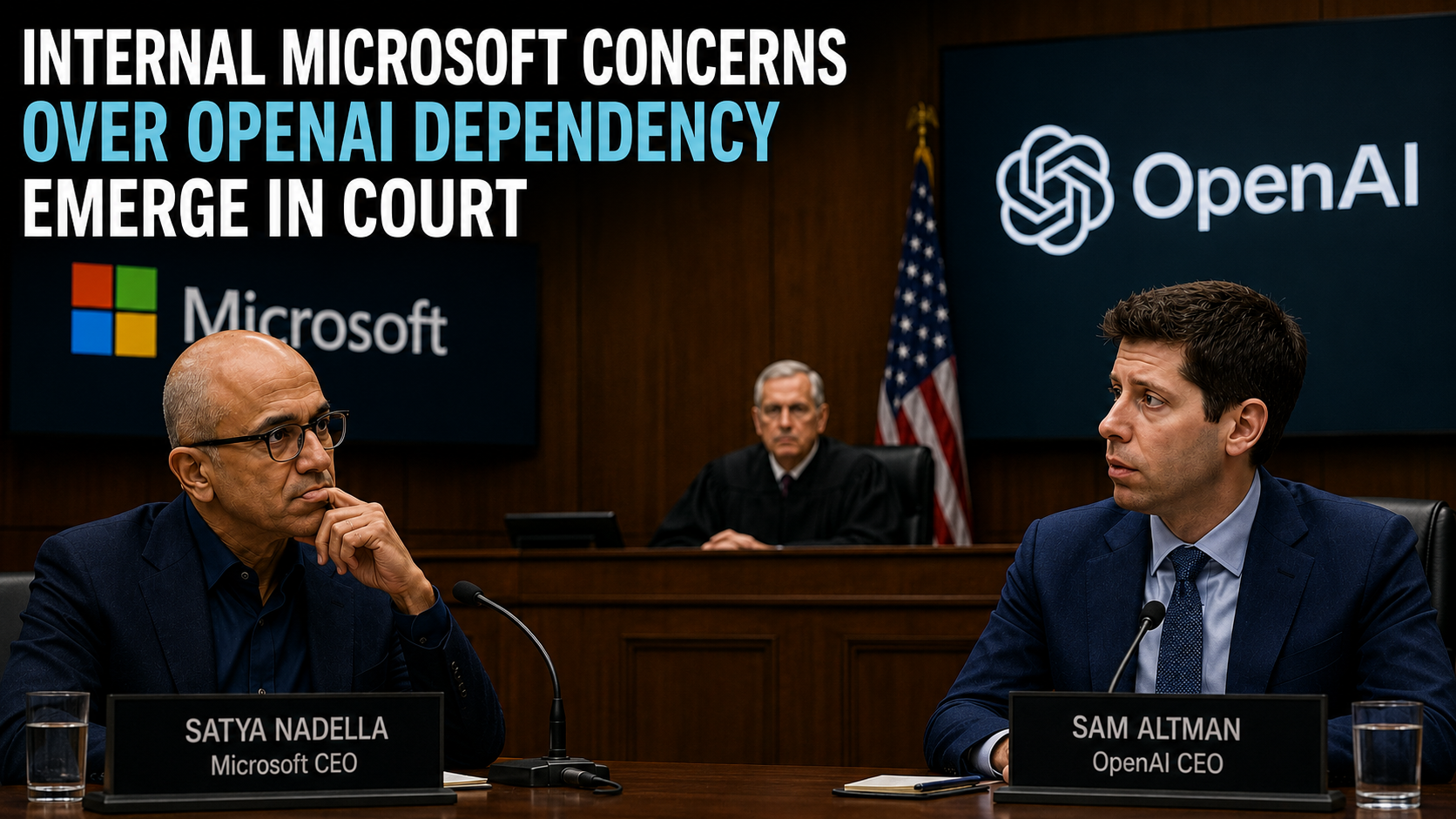
Court testimony from the legal battle involving Elon Musk and Sam Altman has revealed how deeply Microsoft worried about becoming strategically dependent on OpenAI long before the generative AI boom accelerated.
Internal communications show that CEO Satya Nadella feared Microsoft could repeat the historic IBM mistake, supporting a technology partner that ultimately grows more powerful than the incumbent platform provider.
That concern shaped Microsoft’s insistence on securing intellectual property access, infrastructure positioning, and influence across the AI technology stack as OpenAI’s capabilities advanced.
The partnership initially delivered major strategic benefits. Microsoft gained critical AI infrastructure expertise, accelerated Azure demand, and developed large-scale supercomputing capabilities by supporting OpenAI’s model development. However, OpenAI’s explosive growth transformed the balance of power. The company now commands one of the highest valuations in technology, has expanded relationships with multiple major cloud providers, and no longer relies exclusively on Microsoft infrastructure.
Microsoft has since revised its OpenAI agreements, reducing exclusivity while adapting to a more competitive relationship. At the same time, Microsoft has intensified efforts to strengthen its independent AI strategy. The company has invested in proprietary model development, restructured leadership, expanded Copilot ambitions, and built relationships with competing AI model providers.
While the OpenAI alliance remains strategically important, the courtroom disclosures make one reality clear: what began as a transformative partnership has evolved into a far more complex coexistence between collaborator, infrastructure provider, investor, and increasingly, competitor.