The art of leadership is undergoing a transition. The time when leaders shouted orders to their employees is coming to an end. The modern organization understands the importance of not only managing employees but also motivating them to achieve the company’s goals through collective efforts. One of the most effective ways to manage and motivate employees is the democratic leadership style. This guide will explore democratic leadership and its effectiveness in detail.
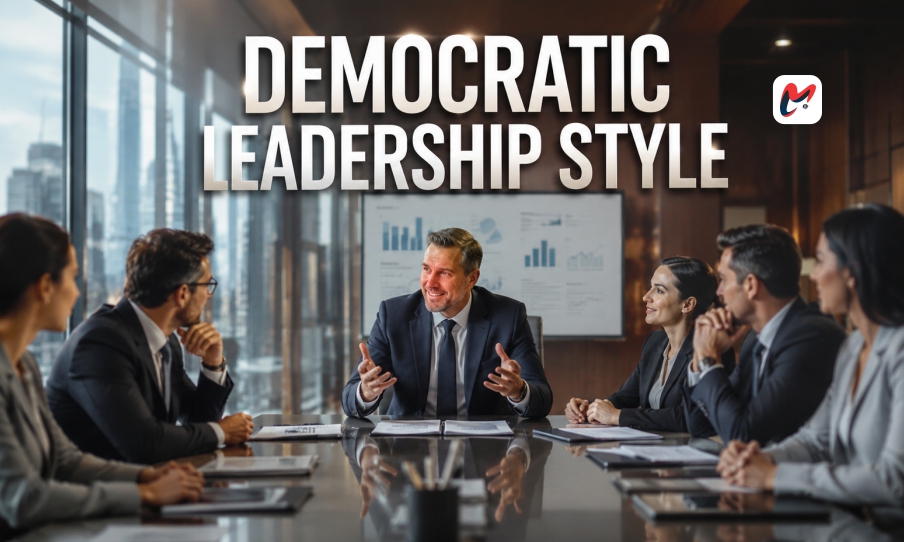
The democratic leadership style assumes that all team members can make decisions and contribute to problem-solving. A democratic leader does not take responsibility for finding solutions, instead, he invites the team to participate in discussions and consider possible options before making a decision. This does not mean that the leader is not important in the decision-making process. On the contrary, the leader guides the team, articulates goals, and coordinates actions.
Participatory leadership, or democratic leadership, views employees as thinking partners. Team members are considered not only as people who implement tasks but also as creators of the best ways to solve problems.
The leader helps the team, but he does not have exclusive decision-making power; he must consider the opinions of his subordinates, discuss options, and weigh the costs and benefits of decisions.
This collaborative environment creates a sense of ownership among employees. When individuals know their voices matter, they naturally become more invested in achieving organizational goals. Such engagement often leads to stronger commitment, higher morale, and better overall performance.
Benefits of a Participative Workplace
One of the greatest strengths of the democratic leadership style is its ability to encourage creativity. Teams composed of people from different backgrounds often bring unique perspectives to the table. When these viewpoints are welcomed rather than ignored, organizations gain access to a wider range of ideas that may not emerge under a more rigid leadership approach.
Employee satisfaction also improves considerably in collaborative workplaces. People generally appreciate leaders who listen carefully and consider suggestions before making decisions. Feeling respected builds trust between management and employees, reducing workplace conflicts and increasing loyalty.
Another significant advantage is improved problem-solving. Complex business challenges rarely have simple solutions. By involving multiple people with different experiences, organizations can identify risks earlier and develop more balanced strategies. Decisions reached through thoughtful discussions are often more practical because they reflect real-world perspectives from various departments.
This approach also supports professional development. Employees gradually improve their communication, analytical thinking, and decision-making abilities by participating in regular discussions. Over time, organizations develop a stronger leadership pipeline because team members become accustomed to taking responsibility and contributing beyond their assigned roles.
Challenges Leaders Should Consider
While collaboration offers numerous advantages, it is not without limitations. The democratic leadership style requires time, patience, and effective communication. Gathering opinions from several individuals naturally extends the decision-making process. In situations requiring immediate action, lengthy discussions may delay important responses.
Another challenge arises when team members disagree strongly with one another. Healthy debates can generate better ideas, but unresolved conflicts may reduce productivity if leaders fail to manage conversations effectively. Maintaining mutual respect becomes essential to ensure discussions remain constructive rather than personal.
Leaders must also strike a careful balance between participation and authority. Seeking feedback does not mean avoiding difficult decisions. There will be occasions when the leader must choose a direction despite mixed opinions. If leaders appear indecisive or attempt to satisfy everyone, teams may lose confidence in their ability to provide clear direction.
Additionally, not every employee may be interested in participating equally. Some individuals prefer focusing on their technical responsibilities rather than contributing to strategic discussions. Effective leaders recognize these differences and encourage participation without forcing unnecessary involvement.
When This Leadership Approach Works Best
The democratic leadership style performs exceptionally well in environments where innovation, collaboration, and knowledge sharing are essential. Technology companies, educational institutions, creative agencies, research organizations, and consulting firms frequently benefit from this method because fresh ideas often emerge through open discussions.
It is particularly valuable when organizations are developing new products, solving customer challenges, or improving internal processes. In such situations, employees working closest to the problem often possess practical insights that senior management may overlook.
However, this approach may be less effective during emergencies, military operations, or crisis situations where immediate decisions are necessary. During these circumstances, organizations often rely on more directive leadership to ensure quick responses and minimize confusion.
Successful leaders understand that no single leadership method fits every circumstance. They adapt their style based on the urgency of the situation, the experience of the team, and the complexity of the decisions involved. Flexibility remains one of the defining qualities of effective leadership.
Creating a Culture of Trust and Collaboration
Implementing the democratic leadership style successfully requires more than simply asking for opinions during meetings. Leaders must consistently demonstrate that employee contributions are genuinely valued. Listening carefully, acknowledging suggestions, and explaining the reasoning behind final decisions help build credibility and trust.
Open communication should become part of the organization’s daily culture rather than an occasional exercise. Team meetings, brainstorming sessions, anonymous feedback channels, and regular one-on-one conversations all create opportunities for meaningful participation. Equally important is recognizing employees whose ideas contribute to positive outcomes, as appreciation encourages continued engagement.
A workplace built on collaboration often experiences stronger relationships, increased motivation, and greater adaptability. Employees become more willing to share knowledge, support colleagues, and work toward common goals because they feel connected to the organization’s success.
Ultimately, leadership is not measured solely by authority but by the ability to inspire people to perform at their best. Organizations that cultivate trust, encourage dialogue, and empower employees are often better positioned to navigate challenges and seize new opportunities. By balancing participation with clear direction, leaders can create an environment where both individuals and businesses continue to grow together.