
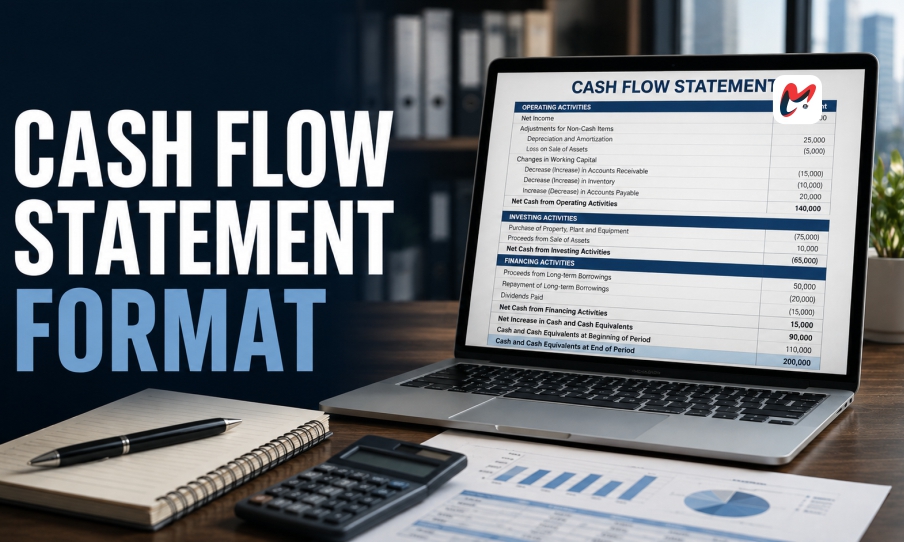
Every company actively monitors its financial performance in order to ensure a constant supply of money. However, not all limited liability companies and enterprises are able to control the inflow and outflow of cash properly. In other words, despite high profitability, a firm may face cash flow problems due to a lack of cash funds. Therefore, it is critical to design a cash flow statement format beneficial for analyzing the overall financial situation and cash flows of a business.
Actually, every investor, owner, or accountant familiar with the inner workings of an enterprise knows that a cash flow statement helps understand the financial health of a firm. The cash flow statement format provides the necessary information about the amount of cash and its equivalents, which are inflowing and outflowing the organization during a particular period.
In addition, it allows interested parties to evaluate whether a firm operates effectively and consistently. Evidently, any company with sufficient cash flow capacity can survive during economic recessions and crises.
It is vital to understand the cash flow statement structure in order to become aware of the financial performance of an organization. The cash flow statement layout determines an entity’s liquidity position and financial capability at a certain point in time. Although the income statement is prepared using the accrual method of accounting, cash flow statements record cash receipts and disbursements on a cash basis. As a result, the cash flow report provides relevant data about a firm’s ability to meet obligations to creditors, suppliers, employees, and other stakeholders. All components listed together in one document help predict cash shortages and surpluses and determine the financial flexibility of an enterprise.
Financial institutions and investors often examine cash flow statements before approving loans or making investment decisions because they provide a realistic picture of liquidity.
Components of the Standard Cash Flow Statement
The standard cash flow statement format consists of three primary sections, each representing a different source or use of cash.
The first section covers operating activities. This includes cash generated from the company’s core business operations, such as customer receipts, payments to suppliers, employee salaries, taxes, and other day-to-day expenses. Positive cash flow from operations usually indicates that the business can sustain itself without relying heavily on external funding.
The second section focuses on investing activities. It records cash used to purchase long-term assets like machinery, equipment, property, or investments in other businesses. It also includes proceeds received from selling these assets. Businesses in expansion phases often report negative cash flow here because they invest heavily in future growth.
The final section represents financing activities. It includes cash received from issuing shares, borrowing funds, repaying loans, paying dividends, or buying back company stock. This section reflects how a business finances its operations and expansion.
Together, these three categories explain the overall increase or decrease in cash during the reporting period.
Direct and Indirect Methods of Preparation
Businesses generally prepare cash flow statements using either the direct method or the indirect method.
The direct method lists actual cash receipts and cash payments made during the accounting period. Since it directly reports cash inflows and outflows, it offers greater transparency. However, preparing this method requires detailed transaction records, making it more time-consuming for many organizations.
The indirect method is more commonly used. It starts with net profit and adjusts for non-cash expenses such as depreciation, amortization, gains, losses, and changes in working capital. This method connects the income statement with actual cash generated from operations and is widely accepted under various accounting standards.
Regardless of the method used, the cash flow statement format ultimately presents the same net cash position. The difference lies only in how operating cash flow is calculated and presented.
Why Businesses Should Follow a Standard Format
Maintaining a consistent cash flow statement format offers several advantages beyond regulatory compliance. It improves financial transparency, allowing management to evaluate operational efficiency and identify potential liquidity problems before they become serious.
A properly prepared statement helps businesses forecast future cash requirements more accurately. Managers can determine whether sufficient funds are available for expansion projects, inventory purchases, or debt repayments without disrupting daily operations.
Investors also prefer companies that maintain clear and standardized financial reporting because it enables easier comparison across industries and competitors. Reliable cash flow information often builds greater confidence than reported profits alone since cash cannot be manipulated as easily through accounting adjustments.
Small businesses benefit equally from maintaining organized cash flow records. Even companies with strong sales can experience financial stress if customer payments are delayed while expenses remain due. Regular monitoring allows business owners to plan effectively and avoid unnecessary borrowing.
Modern accounting software has simplified the preparation process by automatically categorizing transactions and generating accurate financial reports. Nevertheless, understanding the underlying structure remains valuable because it enables users to interpret financial performance rather than simply generating reports.
A well-prepared cash flow statement format also supports budgeting, strategic planning, tax preparation, and long-term business sustainability. By reviewing trends across multiple reporting periods, organizations can identify seasonal fluctuations, improve working capital management, and make better investment decisions.
Ultimately, cash serves as the lifeblood of every business. While profitability measures long-term success, consistent positive cash flow ensures day-to-day survival. Understanding how cash moves through operating, investing, and financing activities provides deeper insight into a company’s financial health and future prospects. Businesses of every size can benefit from regularly reviewing their cash flow statements and using the information to support smarter financial planning, stronger decision-making, and sustainable growth.