Highlights
- The artificial intelligence investment rally remains strong, but hardware companies powering the boom are warning of mounting geopolitical pressure on supply chains.
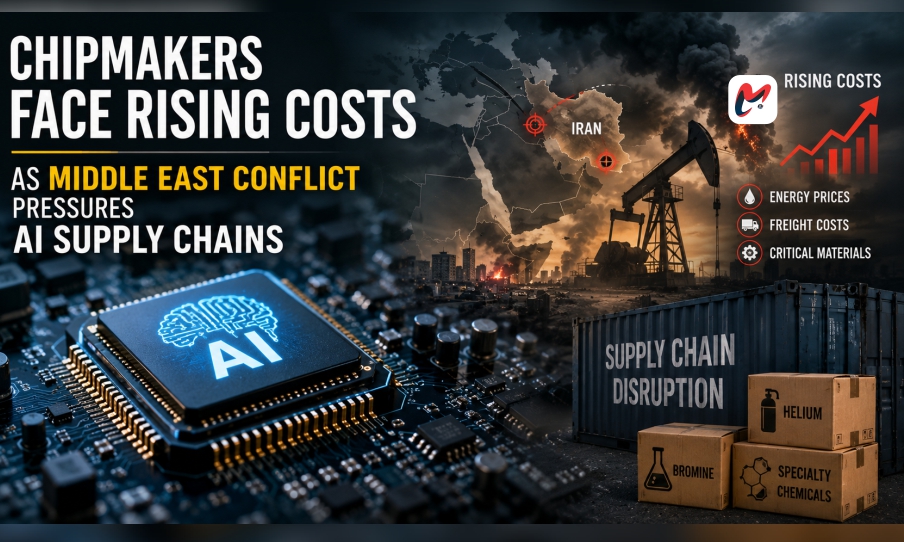
- Semiconductor and electronics manufacturers are facing rising costs linked to the escalating U.S.-Iran conflict, particularly in energy, logistics, and critical industrial materials.
- Key suppliers including chipmakers and contract manufacturers, have flagged growing uncertainty around profitability as operational costs climb.
- Helium and other essential semiconductor manufacturing inputs are emerging as strategic pressure points due to regional disruptions.
- Despite operational headwinds, investor enthusiasm around AI continues to drive strong market performance across semiconductor stocks.
Key Takeaways
- AI growth faces real-world infrastructure risk: Geopolitical conflict is exposing the physical vulnerabilities behind the digital AI boom.
- Chip supply chains remain globally fragile: Critical materials and transport routes continue to create concentrated risk.
- Energy inflation threatens margins: Higher fuel, freight, and manufacturing costs could weaken profitability across the semiconductor ecosystem.
- Diversification becomes a strategic necessity: Manufacturers are accelerating efforts to reduce dependency on single-region supply chains.
- Markets remain focused on AI upside: Investor optimism continues to outweigh near-term operational concerns.
Core Background
The artificial intelligence boom continues to fuel strong market momentum, but the companies supplying the hardware infrastructure behind that expansion are beginning to confront escalating geopolitical pressure.
The ongoing confrontation involving Iran is increasing operational risks for semiconductor manufacturers, electronics suppliers, and critical infrastructure providers that support the AI ecosystem.
The impact extends beyond direct trade exposure. Semiconductor manufacturing depends heavily on complex global supply chains for industrial gases, specialty chemicals, metals, and high-precision logistics—all of which become vulnerable during geopolitical instability.
Helium, a critical input in semiconductor fabrication, has emerged as one of the most closely watched supply concerns, alongside broader disruptions affecting freight movement, raw materials, and industrial energy costs.
Manufacturers are responding by increasing inventory buffers, diversifying sourcing relationships, and strengthening supply resilience strategies.
However, prolonged instability could create broader second-order effects, including weaker supplier margins, higher infrastructure deployment costs, and rising expenses for AI data center construction.
The situation highlights a growing contradiction within the AI economy: while enthusiasm around artificial intelligence remains intense, the physical infrastructure supporting that growth remains deeply exposed to geopolitical shocks.
For now, financial markets continue prioritizing AI’s long-term growth potential over short-term supply chain turbulence—but sustained disruption could eventually challenge that optimism.