Highlights
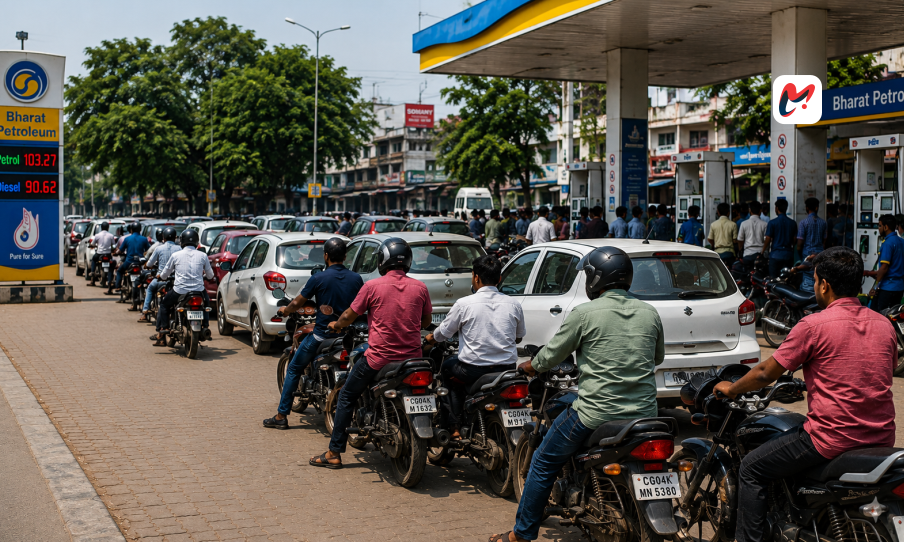
- Raipur witnessed long queues at petrol pumps as panic buying intensified over rumors of a fuel shortage.
- Several fuel stations temporarily shut after demand rapidly exhausted available stock, though operators maintained that supply chains remain functional.
- Fuel dealers attributed the disruption primarily to consumers purchasing excess fuel out of fear rather than any confirmed large-scale supply breakdown.
- Similar scenes emerged across other parts of Chhattisgarh, including Kondagaon, Bilaspur, and Jashpur.
- Some outlets imposed temporary fuel purchase caps to manage inventory and ensure wider access for consumers.
Key Takeaways
- Rumors triggered operational disruption: Panic buying, rather than an official supply shortage, created immediate pressure on fuel distribution.
- Temporary stock depletion intensified public concern: High demand caused some stations to run dry before scheduled replenishment.
- Controlled rationing emerged as a response: Select dealers introduced purchase limits to prevent hoarding and improve distribution fairness.
- Supply operators urge calm: Fuel station managers maintain that supply remains active despite short-term logistical delays.
- Consumer sentiment can rapidly disrupt essential services: Fear-driven purchasing behavior quickly amplified local infrastructure stress.
Core Background
Raipur experienced widespread congestion at fuel stations as rumors of a petrol and diesel shortage triggered panic buying across the city. Motorists lined up for extended periods at multiple outlets, while several stations suspended operations after available stock depleted under unusually heavy demand.
Fuel station operators clarified that the disruption does not stem from a confirmed systemic fuel shortage. Instead, they pointed to accelerated consumer purchasing behavior, with many motorists buying more fuel than usual in anticipation of potential supply interruptions.
The sudden surge placed pressure on routine replenishment cycles, creating temporary stock gaps at some locations. The impact extended beyond Raipur. Fuel stations in parts of Chhattisgarh, including Kondagaon, Bilaspur, and Jashpur, reported similar crowding, partial shutdowns, or rationed sales. Some operators imposed purchase limits to stabilize local supply distribution, prioritizing access across a wider consumer base rather than allowing bulk purchases. Fuel dealers said supply coordination with depots remains active, though normal replenishment timelines can create short delays when demand spikes unexpectedly.
This highlights how misinformation or unverified market fears can rapidly disrupt access to essential public services, even in the absence of a confirmed structural supply crisis.