
Highlights
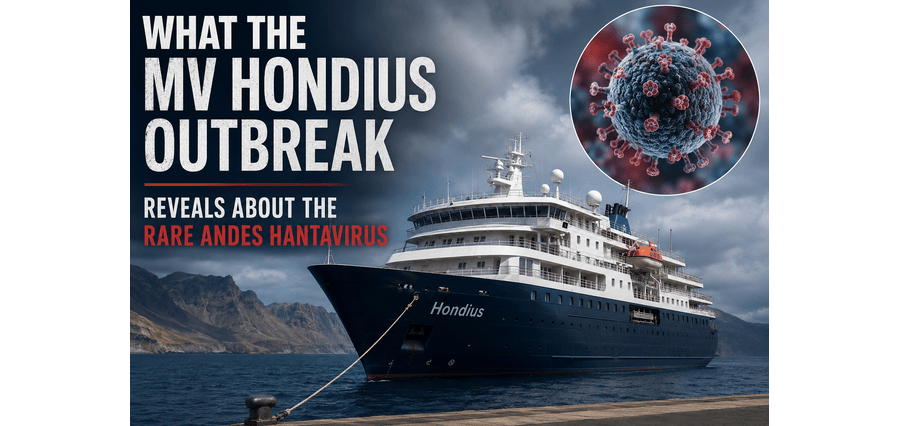
- The cruise ship MV Hondius arrived in the Canary Islands after a hantavirus outbreak triggered an international public health response.
- Authorities linked three confirmed cases and five suspected cases to the outbreak, including one death and multiple hospitalizations.
- Health officials identified the Andes strain of hantavirus, a rare variant capable of human-to-human transmission under close contact.
- Governments across Europe, North America, and other regions activated evacuations, passenger monitoring, and quarantine protocols.
- Health experts maintain that the outbreak remains contained, with no evidence of wider community spread.
Key Takeaways
- What is the virus? Hantavirus refers to a family of viruses primarily transmitted through infected rodents, particularly through exposure to urine, droppings, or saliva.
- Which strain is involved? Authorities confirmed the Andes strain, a rare variant mostly found in Argentina and Chile and the only known hantavirus capable of limited person-to-person transmission.
- How does it spread? Most infections occur through inhalation of contaminated particles from rodent waste. The Andes strain can spread through prolonged, close human contact with symptomatic individuals.
- Why does it matter? The virus can cause severe respiratory illness with mortality rates reaching 20% to 40% in serious cases, making rapid containment critical.
- What happens next? Health officials continue isolating exposed passengers, tracing close contacts, and monitoring individuals due to the virus’s long incubation window.
Core Background
The expedition cruise ship MV Hondius reached the Canary Islands after a hantavirus outbreak forced health authorities to launch a coordinated international containment operation.
What is Hantavirus?
Hantavirus describes a group of viruses that typically infect humans after exposure to infected rodents, particularly rats and mice. People usually contract the virus by inhaling contaminated airborne particles from rodent urine, saliva, or droppings.
The current outbreak involves the Andes strain, a rare subtype primarily found in South America. Unlike most hantavirus strains, the Andes virus can occasionally spread between humans through prolonged close contact.
Where did the outbreak originate?
Investigators believe exposure likely occurred during the ship’s earlier South American itinerary, particularly in areas across Argentina, Chile, and Uruguay, where infected rodents are known to exist.
Who is Affected?
Authorities confirmed infections in three passengers. A Dutch woman died after contracting the virus. A British passenger remains in intensive care in South Africa, while a Swiss passenger continues treatment in Zurich. Officials identified five additional suspected cases involving passengers and crew from multiple countries, while other exposed individuals remain under medical observation.
When do symptoms appear?
One of the major challenges in containing hantavirus lies in its long incubation period. Symptoms can emerge anywhere from one to eight weeks after exposure, making early detection difficult.
Why is the virus concerning?
The Andes strain can cause Hantavirus Pulmonary Syndrome (HPS), a severe respiratory illness that begins with symptoms such as fatigue, fever, muscle aches, headaches, chills, and abdominal discomfort. In advanced cases, patients develop serious breathing complications requiring urgent hospitalization.
Severe infections can prove deadly, with mortality rates estimated between 20% and 40%.
How are authorities responding?
Health officials isolated passengers aboard the ship, confined exposed individuals to cabins, and coordinated phased evacuations. Countries receiving returning passengers activated contact tracing, medical surveillance, and self-isolation protocols.
Because no specific antiviral treatment or widely available vaccine exists, medical teams rely on supportive care such as oxygen therapy, mechanical ventilation, and intensive care treatment.
At present, health authorities state that the risk to the broader global population remains low, provided containment efforts continue successfully.