Highlights
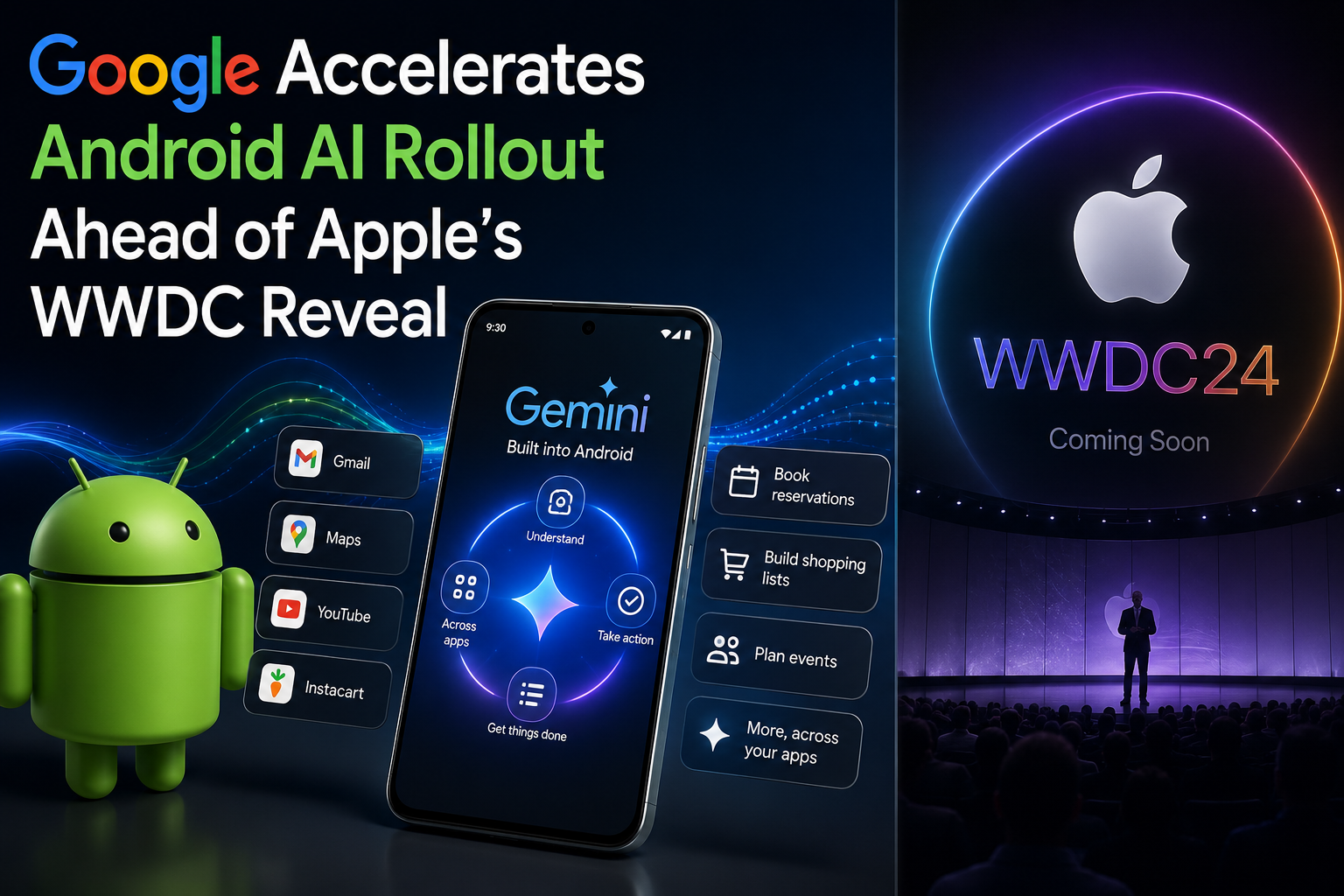
- Google is accelerating its AI strategy by embedding Gemini deeper into Android, transforming it from a chatbot into a system-wide intelligence layer.
- New Android updates will allow Gemini to move across apps, understand on-screen context, automate tasks, and interact across phones, cars, browsers, and laptops.
- Google’s rollout comes just weeks before Apple is expected to unveil a major AI upgrade at WWDC.
- Gemini-powered features will debut first on select Samsung Galaxy and Google Pixel devices before expanding across the Android ecosystem.
- Google is positioning Android as an AI-first platform to strengthen competition with OpenAI, Anthropic, and Apple.
Key Takeaways
- Android evolves into an AI operating layer: Google is shifting from traditional mobile software toward AI-driven task execution and contextual assistance.
- Gemini becomes central to Google’s ecosystem: The AI platform now serves as the intelligence backbone across Android products and services.
- Apple rivalry intensifies: Google’s timing signals a direct competitive push ahead of Apple’s expected AI relaunch.
- Agentic AI moves mainstream: Gemini will begin taking multi-step actions for users rather than simply responding to prompts.
- AI control remains a key concern: Google emphasizes permission-based actions as automation expands deeper into daily device usage.
Core Background
Google is aggressively expanding the role of Gemini across Android, repositioning its mobile operating system as an AI-powered intelligence platform rather than a conventional software environment.
The latest Android rollout introduces Gemini features that move beyond traditional digital assistant behavior. Instead of answering isolated questions, Gemini will interpret screen content, navigate between apps, and complete multi-step tasks on behalf of users.
Examples include pulling information from email, organizing shopping lists, preparing recommendations, and handling reservations—all while requiring final user approval before completing transactions.
This marks Google’s broader shift toward agentic AI, where software actively executes tasks instead of functioning solely as a reactive chatbot.
The strategy extends far beyond smartphones. Google plans to embed Gemini across watches, laptops, smart glasses, browsers, and automotive systems. Android Auto, now active in hundreds of millions of vehicles, will receive a major Gemini-driven redesign, turning in-car interfaces into AI-enabled productivity and assistance platforms.
The timing is strategic. Apple is widely expected to unveil a significantly enhanced AI platform at its upcoming developer conference, increasing pressure on major technology companies to demonstrate practical AI leadership.
At the same time, Google faces intensifying competition from AI-native players such as OpenAI and Anthropic, making Gemini central not only to Android’s future but to Alphabet’s broader artificial intelligence ambitions.
Investor confidence reflects that momentum, as markets increasingly view AI integration—not just AI model development—as the next major battleground in consumer technology.