Highlights
- The British Museum is creating a large woodland installation inspired by the Bayeux Tapestry ahead of the tapestry’s historic loan exhibition.
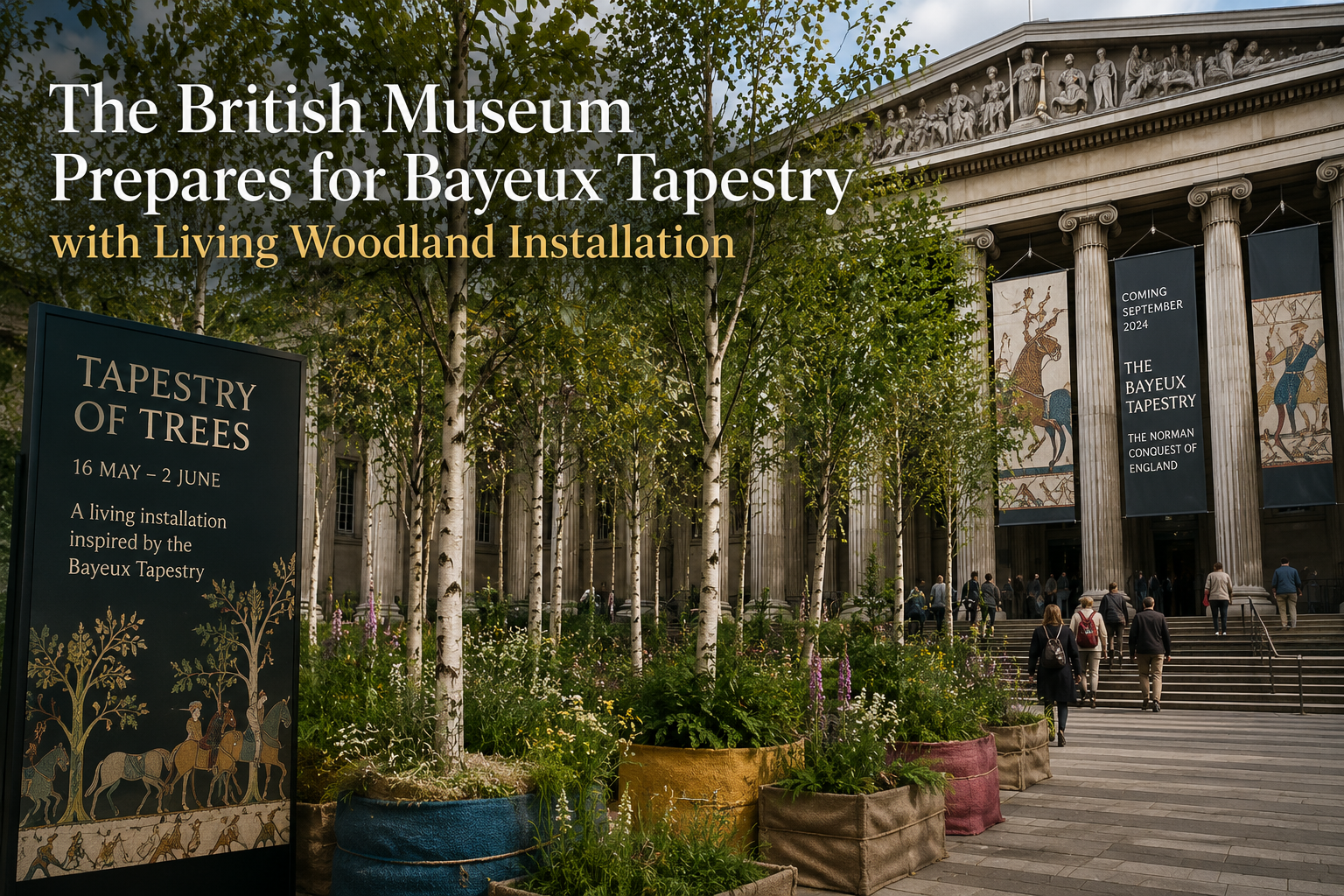
- The installation, titled “Tapestry of Trees,” will transform the museum’s forecourt with 37 silver birch trees, woodland grasses, and medieval-inspired plant species.
- The display draws direct inspiration from the tapestry’s depiction of trees, which appear throughout the historic artwork as storytelling markers and environmental settings.
- The initiative serves as the public prelude to the British Museum’s major September exhibition on the Norman Conquest of England.
- The installation also aligns with the museum’s broader forecourt redevelopment plans ahead of a permanent redesign scheduled for 2027.
Key Takeaways
- History moves beyond gallery walls: The British Museum is using immersive landscape design to extend the Bayeux Tapestry experience into public space.
- Medieval storytelling inspires modern design: The installation recreates environmental elements featured in one of Europe’s most iconic historical artworks.
- The Bayeux Tapestry loan marks a major cultural event: The exhibition represents a rare international movement of a fragile 1,000-year-old masterpiece.
- Museum transformation continues: The installation previews broader architectural and visitor experience changes planned for the institution.
- Conservation debate remains active: While celebrated diplomatically, transporting the historic textile continues to raise preservation concerns.
Core Background
The British Museum is bringing elements of medieval England into central London through a temporary landscape installation inspired by the Bayeux Tapestry.
The project, titled “Tapestry of Trees,” will recreate aspects of the woodland environment depicted throughout the historic textile, offering visitors an immersive introduction before the tapestry arrives for exhibition later this year.
The installation includes 37 silver birch trees—a direct reference to the number of trees or tree groupings represented within the Bayeux Tapestry itself. In the original artwork, trees function both as visual dividers between scenes and as environmental markers that establish medieval settings.
Landscape designer Andy Sturgeon developed the installation to evoke the wooded terrain of East Sussex, where the Battle of Hastings took place in 1066, the defining historical event portrayed in the tapestry.
To deepen the visual connection, the installation will incorporate plant species associated with historic woodland ecosystems, including hazel, dog rose, foxglove, and ferns, while using dyed materials that reflect the tapestry’s distinctive color palette.
The Bayeux Tapestry, a nearly 230-foot medieval textile chronicling the Norman conquest of England, will arrive in London as part of a major exhibition while its home institution in Normandy undergoes extensive renovation.
The loan marks a significant cultural and diplomatic milestone between the UK and France. However, the transportation of such a fragile and historically invaluable object has also generated conservation concerns among experts and cultural commentators.
Beyond the exhibition, the installation also signals the British Museum’s broader modernization efforts, as the institution prepares to redesign its forecourt into a permanent botanical public space aimed at improving visitor experience and access.