
Highlights
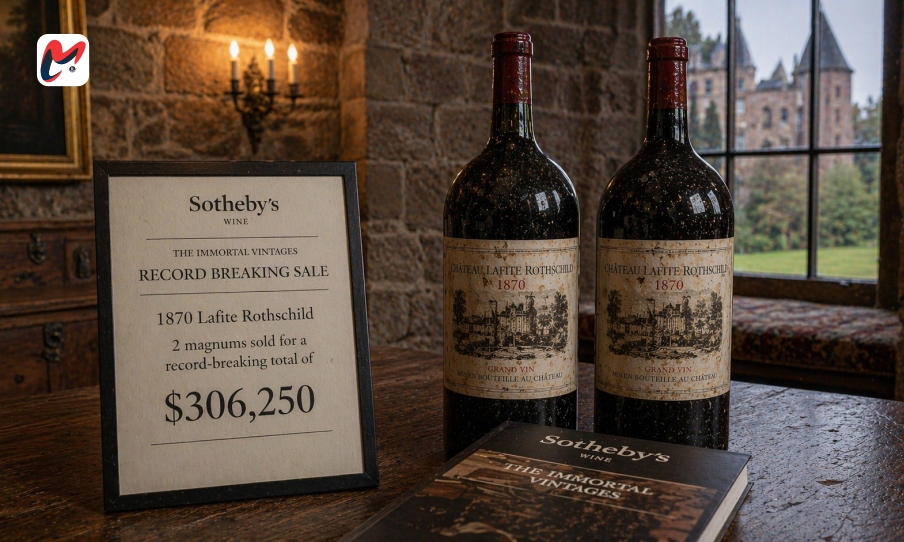
- Two rare magnums of Château Lafite Rothschild 1870 sold for a combined $306,250 at a Sotheby’s auction in New York.
- Each bottle set a world record for its age and format, with one selling for $106,250 and the other reaching $200,000 within minutes.
- The wines originated from the cellar of Glamis Castle, where collectors had long overlooked them.
- Experts now rank these bottles among the best-preserved pre-19th century Bordeaux wines ever discovered.
- The auction, which included more than 250 historic Bordeaux items, produced total sales that exceeded $2 million.
Key Takeaways
- The combination of exceptional preservation and limited bottle availability created historic value for these bottles.
- The connection to Glamis Castle increased the wines’ attractiveness to potential buyers. Collectors value pre-phylloxera wines because these wines maintain their authentic vineyard taste.
- Global buyers engaged in competitive bidding, which caused prices to increase within a few minutes during the auction process.
- The two buyer groups in this market collect bottles for different purposes because one group sees bottles as financial assets, while the other group wants to experience rare historical drinks.
Core Background
The historic Scottish estate of Glamis Castle has functioned as the ancestral residence of the Earls of Strathmore and Kinghorne since the 14th century. The castle has royal ties because it was a residence for Mary Queen of Scots and later became the place where Elizabeth Bowes-Lyon spent her early years.
In the 1970s discovered an archive was discovered that contained a secret collection of Bordeaux wines that had been kept in the castle’s cellar since its foundation during the late 19th century. The records showed that the 13th Earl of Strathmore purchased several bottles of 1870 Lafite, but he discarded them after he found the wine unpalatable.
The wine underwent a natural aging process, which resulted in the creation of an extremely rare vintage that has been kept in its original state. The experts confirmed that the bottles maintained outstanding balance and depth and structural integrity, which is uncommon in wines of their age.
The Phylloxera epidemic, which devastated vineyards in Europe, started after the 1870 vintage because it forced vineyard owners to use grafting methods, which changed their vines’ genetic makeup. The wines from this period provide an exceptional opportunity to experience a winemaking technique that no longer exists, making them extremely sought after by collectors.
Today, auction houses sell bottles from 1870 vintages twice a decade, while they sell magnum bottles even less frequently. The fine wine market experiences high demand because this wine combination possesses both historical value and outstanding preservation.
The wines that collectors and connoisseurs acquire represent more than expensive items because they allow people to experience historical winemaking techniques from a past time that is almost forgotten.