Highlights
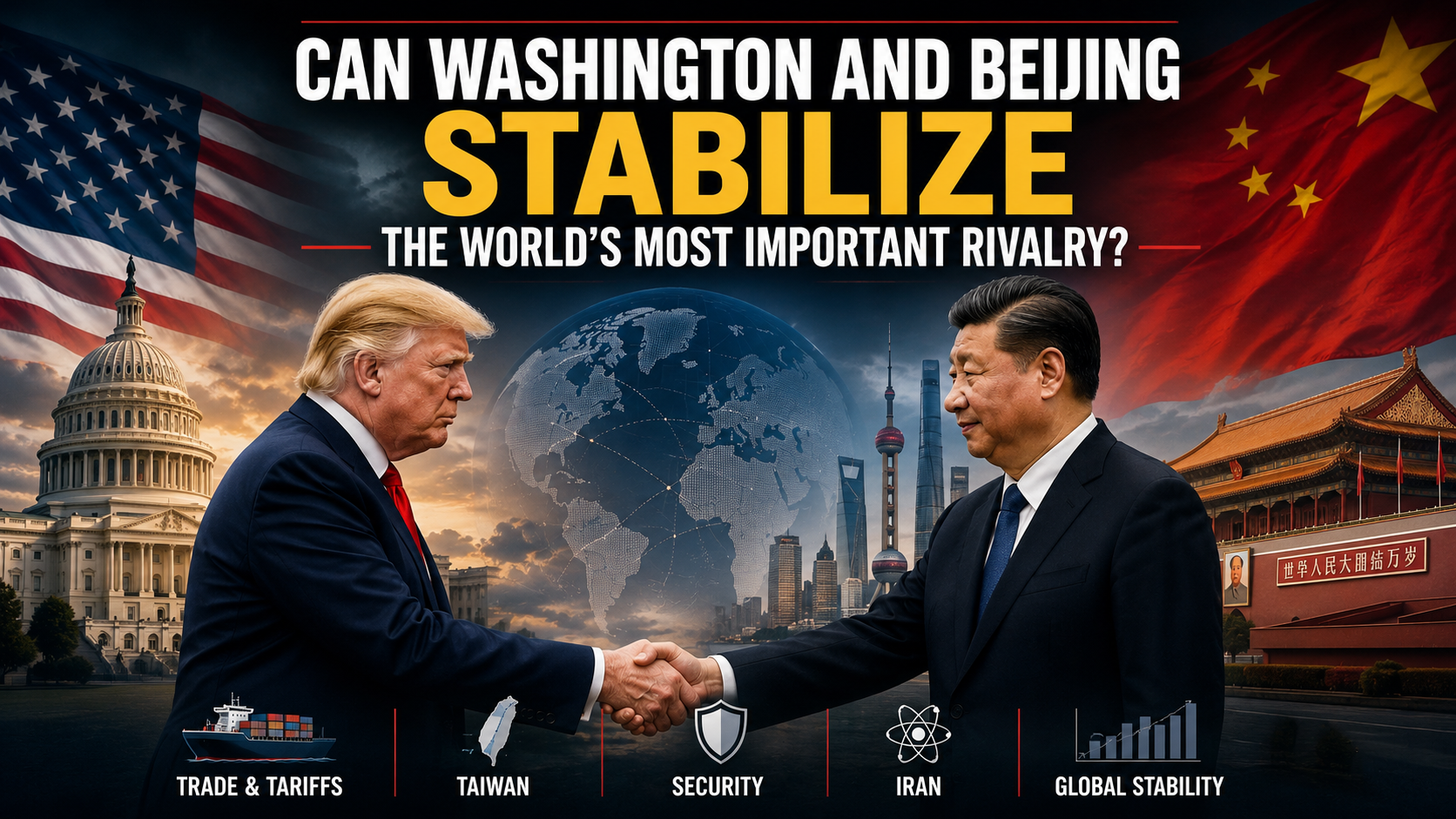
- Donald Trump and Xi Jinping opened a high-stakes summit in Beijing focused on trade, tariffs, Taiwan, Iran, and broader geopolitical stability.
- Both leaders signaled the strategic importance of the meeting as global attention remained fixed on the future of U.S.-China relations.
- Xi warned that mishandling sensitive issues—particularly Taiwan—could push bilateral ties into dangerous territory.
- The summit marks the first visit by a sitting U.S. president to China in nearly a decade amid heightened economic and technological rivalry.
- Senior political leaders and major business executives joined the diplomatic engagement, underscoring its economic significance.
Key Takeaways
- U.S.-China ties remain the world’s most consequential bilateral relationship: Decisions emerging from the summit could influence trade, security, and global markets.
- Taiwan remains a major flashpoint: Beijing continues framing the issue as central to long-term bilateral stability.
- Trade tensions still dominate strategic engagement: Tariffs, economic competition, and technology restrictions remain unresolved pressure points.
- Diplomacy and competition now coexist: Both powers continue engaging directly despite intensifying rivalry.
- Business interests remain deeply tied to geopolitics: The presence of major corporate leaders highlights how commercial strategy intersects with diplomacy.
Core Background
Donald Trump and Xi Jinping launched a closely watched summit in Beijing as both nations navigate one of the most strategically complex bilateral relationships in the modern era. The discussions span major geopolitical and economic issues, including trade disputes, tariffs, Taiwan, Iran, and broader global security concerns.
The meeting comes at a time of elevated tension between Washington and Beijing, shaped by years of trade friction, export controls, technology competition, and shifting global alliances. Xi emphasized the strategic weight of the relationship, raising the broader question of whether the world’s two dominant powers can manage rivalry without escalating toward deeper conflict.
Taiwan remains one of the summit’s most sensitive issues. Beijing continues to treat the island as a core sovereignty matter, making its handling central to diplomatic stability. Trade also remains a major pillar of the talks. Since Trump’s earlier presidency, economic friction between the two powers has intensified significantly, with tariff escalation and retaliatory measures reshaping global supply chains and investor sentiment.
The summit also carries strong business implications. The presence of prominent American corporate leaders reflects continued commercial interdependence between the two economies despite growing political competition. Beyond immediate policy outcomes, the larger significance of the summit lies in whether both nations can establish a more stable framework for coexistence in an increasingly multipolar and economically fragile global environment.