
Highlights
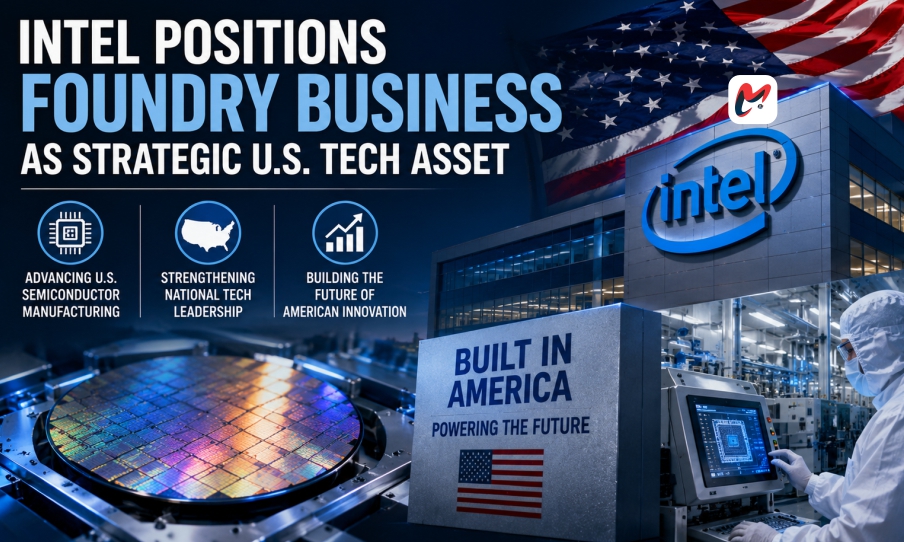
- Intel CEO Lip-Bu Tan says the company’s external chip manufacturing business is gaining momentum as a central pillar of its turnaround strategy.
- Intel’s advanced 18A manufacturing process is showing stronger yield improvements, boosting confidence in its foundry ambitions.
- The company expects commitments from multiple external manufacturing customers in the coming months.
- Intel’s foundry expansion forms part of a broader effort to rebuild advanced semiconductor production capacity in the United States.
- Investors continue backing the turnaround story as Intel pushes to compete more directly with leading global contract chip manufacturers.
Key Takeaways
- Intel’s foundry strategy is becoming more credible: Manufacturing progress is beginning to translate into customer interest.
- Yield improvement remains the critical operational metric: Better chip output directly strengthens profitability and market confidence.
- U.S. semiconductor independence remains a strategic driver: Intel’s manufacturing push aligns with broader supply chain resilience goals.
- Execution will determine competitive viability: Intel still faces the challenge of matching established foundry leaders at scale.
- Investor optimism reflects turnaround momentum: Markets increasingly view manufacturing recovery as core to Intel’s revival.
Core Background
Intel is positioning its contract chip manufacturing business as one of the most important engines of its corporate recovery.
Under CEO Lip-Bu Tan, the company is emphasizing progress in its foundry operations—Intel’s effort to manufacture semiconductors for external customers rather than solely producing chips for its own internal product lines.
The strategy marks a major structural shift for Intel, which historically operated as a vertically integrated chip designer and manufacturer.
A central focus of this transformation is Intel’s advanced 18A manufacturing process, viewed by investors and industry watchers as a defining test of whether the company can rebuild technological competitiveness in high-end semiconductor production.
Improving manufacturing yield—the proportion of usable chips produced per wafer—has become one of the most important indicators of operational credibility, profitability, and customer confidence.
Intel says progress in this area is beginning to attract serious external customer engagement, signaling that the foundry business may be moving from strategic vision toward commercial execution.
Beyond corporate turnaround ambitions, Intel’s manufacturing push carries national strategic significance as the United States seeks to strengthen domestic semiconductor production capacity and reduce dependence on overseas fabrication.
The company’s long-term objective extends beyond recovery: Intel aims to position itself as a viable competitor in the global third-party semiconductor manufacturing market, a space currently dominated by Asian foundry leaders.
The next phase of customer wins and production execution will determine whether Intel’s manufacturing comeback becomes a durable industry shift or remains an ambitious restructuring effort.
Read Also : Chipmakers Face Rising Costs as Middle East Conflict Pressures AI Supply Chains