
Highlights
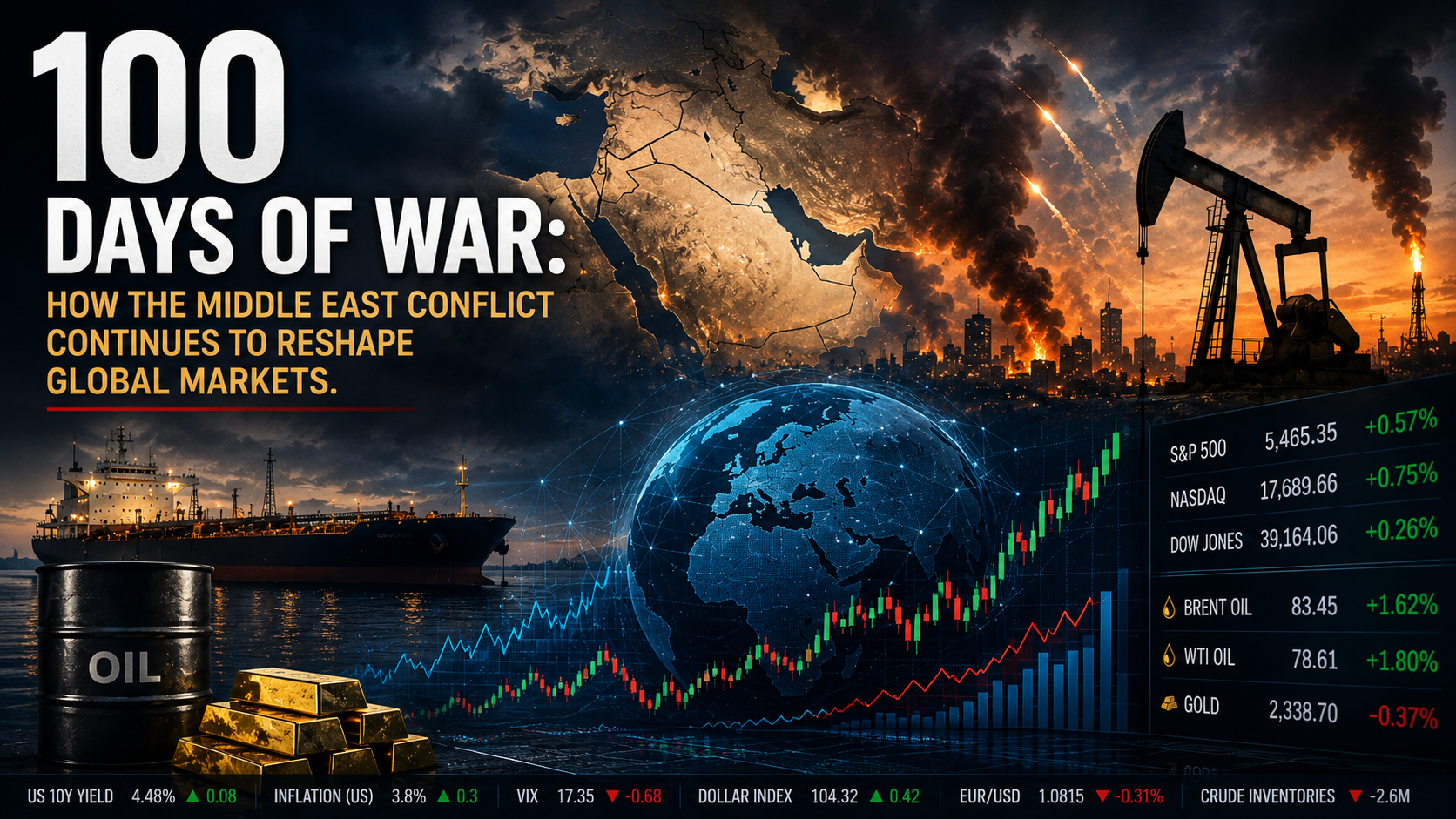
- The Middle East conflict has reached its 100-day mark, continuing to influence global markets, inflation trends, and economic sentiment.
- Despite ongoing geopolitical tensions, major U.S. stock indices have recovered initial losses, with the S&P 500 reaching new record highs.
- Government bond markets remain under pressure as investors price in persistent inflation and prolonged higher interest rates.
- Oil prices remain significantly above pre-war levels due to supply disruptions and the prolonged closure of the Strait of Hormuz.
- Inflation is rising across several major economies as elevated energy costs filter through to consumers and businesses.
Key Takeaways
- Equity markets remain resilient: Investors continue to favor growth sectors, particularly artificial intelligence and technology.
- Bond markets signal caution: Elevated yields reflect concerns about inflation, slower growth, and prolonged economic uncertainty.
- Energy remains the central risk factor: Oil supply disruptions continue to shape inflation expectations and market volatility.
- Global economies face mounting pressure: Higher energy costs are affecting consumer prices, business costs, and growth outlooks.
- Markets are betting on eventual de-escalation: Investors appear to believe the conflict will not become a prolonged global economic shock.
Core Background
One hundred days after the outbreak of conflict in the Middle East, financial markets continue to navigate a complex landscape shaped by geopolitical uncertainty, elevated energy prices, and inflationary pressures.
Although negotiations between the United States and Iran have yet to produce a lasting resolution, a fragile ceasefire has helped prevent a broader escalation. However, uncertainty surrounding the region remains a key influence on investor sentiment.
Global equity markets initially reacted sharply to the conflict, but U.S. stocks have since rebounded strongly. Investor enthusiasm surrounding artificial intelligence, technology infrastructure spending, and corporate earnings has largely offset concerns linked to geopolitical risk and rising energy costs.
While stock markets have shown resilience, bond markets have adopted a more cautious stance. Government bond yields across major economies have climbed as investors anticipate higher inflation and a slower pace of interest-rate reductions. Elevated borrowing costs are increasing concerns about future economic growth.
Energy markets remain at the center of the global economic story. The continued disruption of shipping through the Strait of Hormuz—a critical route for global oil supplies—has created supply constraints that have kept crude prices well above levels seen before the conflict began.
Although alternative supply sources and increased exports from other producing regions have helped stabilize markets, analysts warn that prolonged disruptions could tighten inventories further and reignite another surge in oil prices.
The impact is increasingly visible in inflation data. Rising costs for fuel, transportation, and energy have contributed to renewed inflationary pressures across multiple economies, complicating efforts by central banks to restore price stability.
As the conflict continues, markets appear to be balancing two competing narratives: confidence in technological and economic growth opportunities, and concern that prolonged geopolitical instability could eventually undermine global growth and financial stability.
Read Also : Weak Rupee and Higher Travel Costs Fuel Domestic Tourism Surge in India