
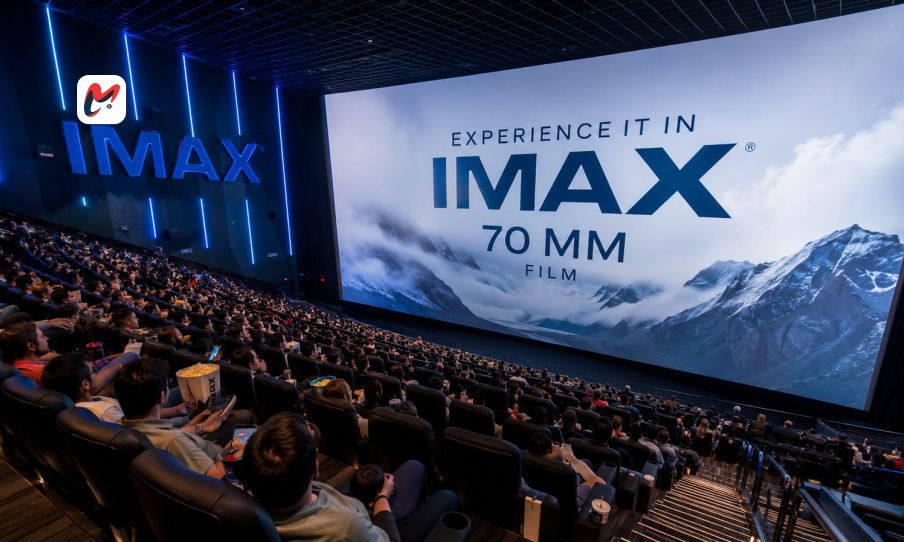
In an age where digital media and the luxury of HDTV in ones personal viewing room dominates the market, the sheer spectacle of the motion picture itself must constantly redefine and raise its own expectations. People who are seeking the ultimate experience in moviegoing often find themselves searching out particular analog theaters, one that provide an experience that no digital projector can rival. There are few sights in the film world more spectacular than an evening spent at a real, proper 70mm IMAX theater. This gargantuan format uses massive screens and true celluloid film to produce images of staggering clarity, contrast and scope. This combination produces an intensely immersive experience that few other media can rival.
The Unmatched Grandeur of Analog Projection Technology
In order to understand just why connoisseurs of the cinema would spend so much money on an experience that technically only offers a novelty attraction above conventional movie theaters one must first take a look at just what makes these displays so breathtaking to begin with. Unlike regular commercial theaters that make use of digital hard drives and lasers, 70mm IMAX theaters make use of massive rolls of 15 perforated film that are fed sideways into an unique set of custom projection equipment. This kind of sheer scale allows for images of absolute clarity, with up to ten times the resolution of conventional 35mm film. Projected upwards on a screen that stretches across the entire length and height of an eight story building, the result is an amazingly detailed picture that has a natural 3D quality to it that is simply breathtaking. A film viewed in such a manner is not an experience confined to an easily escaped reality, but rather one that has a certain kind of very tangible realism that only comes from projecting images of such sheer scale and detail across a very real medium.
The physical mechanics required to run these projectors are nothing short of extraordinary. The film strips travel through the projector at incredible speeds, requiring delicate physical handling, specialized air-loop projection mechanisms, and custom water-cooled lamps to prevent heat damage. Because of this massive technological complexity, operating 70mm IMAX theaters demands a high level of specialized technical expertise from dedicated projectionists who treat every screening like a live theatrical performance. Audiences who travel long distances to reach these venues appreciate that every frame represents a physical masterpiece of chemistry and mechanical engineering working in absolute synchronization.
How High Resolution Transforms Standard Cinematic Viewing
Digital projectors have advanced significantly over the past decade, but physical high-resolution celluloid still holds a undisputed place at the top of visual quality. Experts estimate that a pristine print shown in 70mm IMAX theaters offers the equivalent of roughly eighteen thousand vertical lines of horizontal resolution, far outpacing the standard four thousand lines delivered by typical modern digital projectors. This immense resolution means that directors can compose breathtaking wide shots filled with microscopic detail, from individual blades of grass across a vast field to subtle facial expressions hidden within dense crowds.
Furthermore, the unique aspect ratio provided by full-format analog film projection dramatically expands what viewers can see on screen. Standard digital screens utilize a wide, rectangular box format, whereas authentic 70mm IMAX theaters fill a nearly square tall screen format during specially shot sequences. This additional vertical visual space completely fills the peripheral vision of audience members, pulling them into the world of the story without visible black bars framing the top and bottom of the image. The immediate result is a deep sense of spatial presence where the boundary between the viewer and the silver screen completely vanishes.
The Technical Mastery Behind Large Format Projection
Achieving such profound visual realism requires continuous commitment from filmmakers, theater technicians, and venue operators alike. Legendary directors continue to champion physical celluloid because it captures light with an unparalleled organic softness and dynamic color range that digital sensors struggle to match. When these directors choose to shoot their projects with native large-format cameras, they rely specifically on 70mm IMAX theaters to present their artistic vision precisely as it was captured on set. The intense brightness of powerful xenon bulbs illuminates every frame with radiant clarity, ensuring that shadows retain deep texture while highlights never appear artificially harsh or clipped.
Sound design in these iconic auditoriums is engineered with equal precision to complement the overwhelming visual presentation. Custom laser-aligned sound systems deliver uncompressed audio through massive speaker arrays, transmitting thunderous bass responses and delicate whisper-quiet details straight to every seat in the house. Because the physical room geometry of 70mm IMAX theaters is custom-designed from the ground up, sound waves travel cleanly across the room without harsh acoustic reflections or dull dead spots. The harmonious blend of tactile analog visuals and precision acoustic engineering creates an atmosphere where viewers experience cinematic soundscapes with full physical intensity.
Preserving The Legendary Legacy of True Cinema Screens
Despite the overwhelming popularity of these massive auditoriums among cinema lovers worldwide, finding an active venue capable of projecting physical celluloid prints has become increasingly rare. As the entertainment industry shifted heavily toward digital distribution, many traditional auditoriums converted their projection booths to digital hardware. Consequently, the limited remaining 70mm IMAX theaters across the globe have become prized cultural landmarks for film lovers who view a trip to the cinema as a sacred pilgrimage.
Preserving this historic format requires substantial effort, from manufacturing delicate physical prints to training new generations of skilled projectionists who know how to inspect, splice, and maintain physical film spools. Yet, every major release formatted for this iconic projection setup proves that audience demand for authentic analog cinema remains stronger than ever. Showings at operational 70mm IMAX theaters consistently sell out weeks in advance, proving that audiences actively seek out premium, larger-than-life experiences that cannot be replicated at home.
In an era where convenience often overshadows craft, these legendary venues stand as a triumphant testament to the enduring power of physical cinema. Visiting 70mm IMAX theaters remains the ultimate way to experience narrative filmmaking, offering an unforgettable union of immense visual resolution, physical craftsmanship, and absolute storytelling power.