Highlights
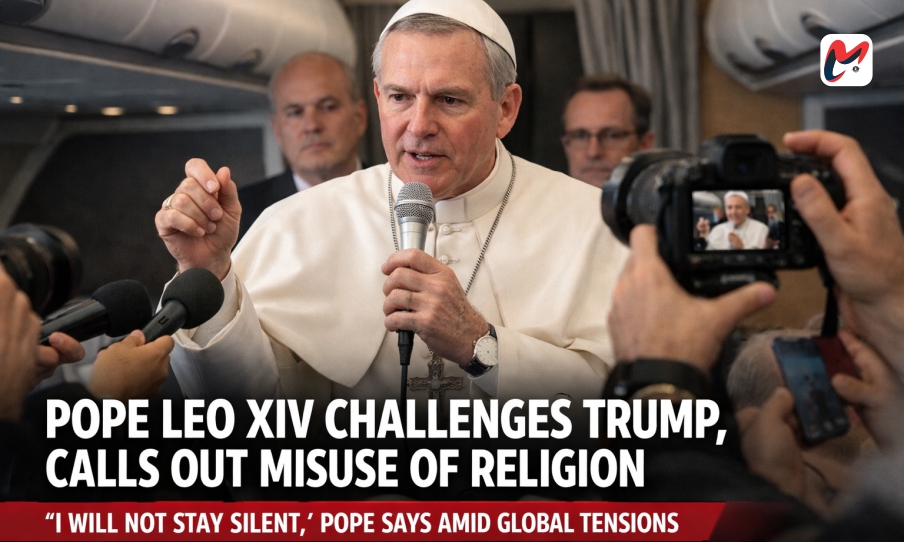
- Pope Leo XIV directly challenged Donald Trump during his Africa tour because this event created a rare opportunity for a pope and a U.S. president to clash.
- The pope declared on the papal plane that he does not fear the Trump administration because he will continue to speak out against injustice.
- He condemned religious misuse that justifies violence, and he showed that violence continues to harm innocent people.
- He acted as a worldwide moral opposition to governmental authority, especially regarding warfare and ethical matters.
- The confrontation reached higher levels of conflict when tensions over the U.S. military operation in Iran increased.
Key Takeaways
- The pope redefines the dynamic: Pope Leo XIV actively confronts political authority, rather than maintaining traditional diplomatic distance.
- He asserts moral leadership: He challenges global leaders and reframes debates around ethics, peace, and human dignity.
- He drives theological debate: His stance pushes back against the political use of “Just War” theory and reshapes its relevance today.
- He signals a stronger Vatican stance: He moves beyond neutrality and calls out actions he sees as morally flawed.
- He uses symbolism strategically: By choosing Lampedusa over the United States, he reinforces his position on immigration and global responsibility.
Core Background
Pope Leo XIV takes his time to make decisions, but he requires exact solutions for international situations. He uses his Augustinian background to create ties between people through his focus on building relationships and fostering open discussions. He proceeds to act with determination whenever he witnesses people violating ethical standards.
He used his African tour to spread his message about establishing peace through responsible actions. He issued a warning about how strong leaders create global instability through their use of religious beliefs to achieve military and political objectives. He showed how humans work together to build a united world through their shared strength.
He did not start this war but he decided to react with strong measures. The American government experienced growing tensions among its leaders because they disagreed about immigration issues, as well as international policies and public displays. He responded to the increasing tensions by using stronger language to speak about the situation.
The Vatican and he objected to U.S. leaders who used “Just War” theory as a military justification. They maintained that the current methods of warfare, which include nuclear weapons, have made such justifications impossible to sustain. He used this position to transform the discussion about the ethical principles that govern warfare.
His leadership demonstrates a transformation of military strategy. He does not simply protect existing traditions, but he develops new interpretations of them according to present needs. Through his clear communication and firm actions, he establishes the Vatican as a moral power that opposes ruling forces.
This moment represents more than a personal dispute. It shows how the two sides of ethical duties and geopolitical power fight against each other while Pope Leo XIV speaks with full authority on international issues.