
Highlights
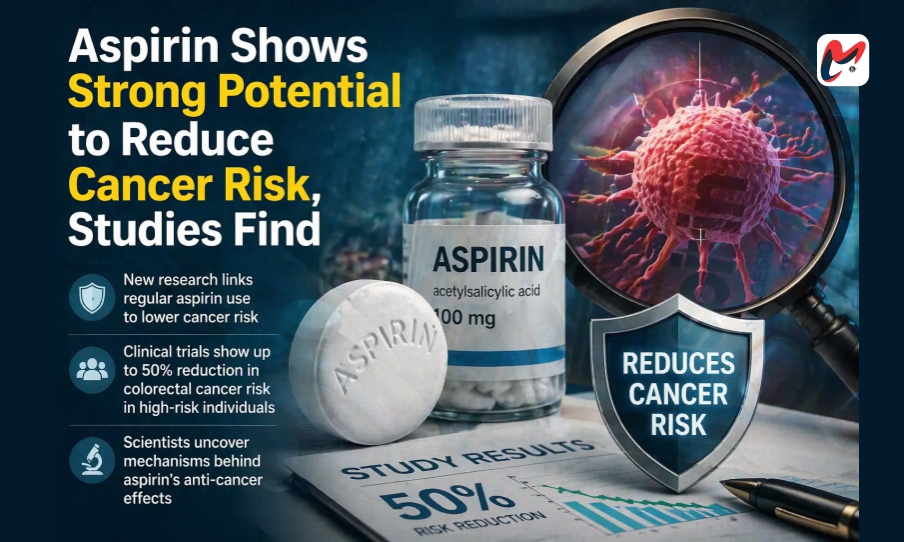
- Aspirin demonstrates high potential to decrease specific cancer risks especially for colorectal cancer.
- Clinical trials demonstrate that routine aspirin consumption leads to substantial reductions in cancer rates while it also stops tumor development.
- Researchers observe that high-risk individuals who take aspirin experience a 50% decrease in their colorectal cancer risk.
- Several countries have revised their medical guidelines to recommend aspirin as a preventive treatment for particular patient populations.
- Scientists have started to uncover the biological processes that enable aspirin to produce its anti-cancer effects.
Key Takeaways
- The common drug aspirin which people use for pain relief and heart health now shows strong potential to prevent cancer.
- Regular aspirin use provides the greatest benefit to patients who have genetic disorders such as Lynch Syndrome.
- Current researchindicatesthat small daily doses produce major health benefits while causing fewer adverse effects.
- Healthcare systems start using aspirin as a preventive measure for people who have high-risk medical conditions.
- Medical experts recommendpeople toreceive professional medical assistance because they face danger from conditions that include bleeding and ulcers.
Core Background
The origins of aspirin trace back to natural compounds which ancient people discovered in willow bark. Scientists developed acetylsalicylic acid through multiple refinement steps which made it one of the most commonly prescribed medicines throughout the world. Researchers initially recognized aspirin for its ability to reduce pain and inflammation. Later, they identified its role in preventing cardiovascular disease by thinning the blood and reducing clot formation. The current scientific research investigates how the drug may help fight cancer. Clinical research has produced convincing evidence.
Long-term trials involving patients with Lynch Syndrome show that consistent aspirin use can cut colorectal cancer risk by half. Additional studies on patients with existing colorectal cancer demonstrate that aspirin significantly lowers the risk of recurrence, especially among those with specific genetic mutations.
Healthcare policy in several regions has changed because these findings exist, which now leads doctors to recommend high-risk patients to use aspirin in controlled quantities. At present, large-scale trials are being conducted to find out if aspirin can stop breast cancer, prostate cancer, and gastroesophageal cancer from developing.
Scientists discover the molecular mechanisms through which aspirin operates. The drug blocks Cox-2 enzymes, which promote inflammation and enable abnormal cellular development. The drug decreases thromboxane production, which leads to reduced clotting factors that help the immune system identify and eliminate cancer cells.
Experts remain cautious about the new medical advancements that show potential. The serious side effects of aspirin, including internal bleeding and ulcers, make the drug inappropriate for common medical use. Medical professionals need to supervise patient aspirin usage, according to researchers.
Aspirin research has expanded to show its effectiveness as a surgical painkiller and now functions as a preventive medicine tool, which transforms cancer risk assessment and long-term health strategies in the medical field.
Read Also : Apple Announces Leadership Transition as John Ternus Succeeds Tim Cook