Highlights
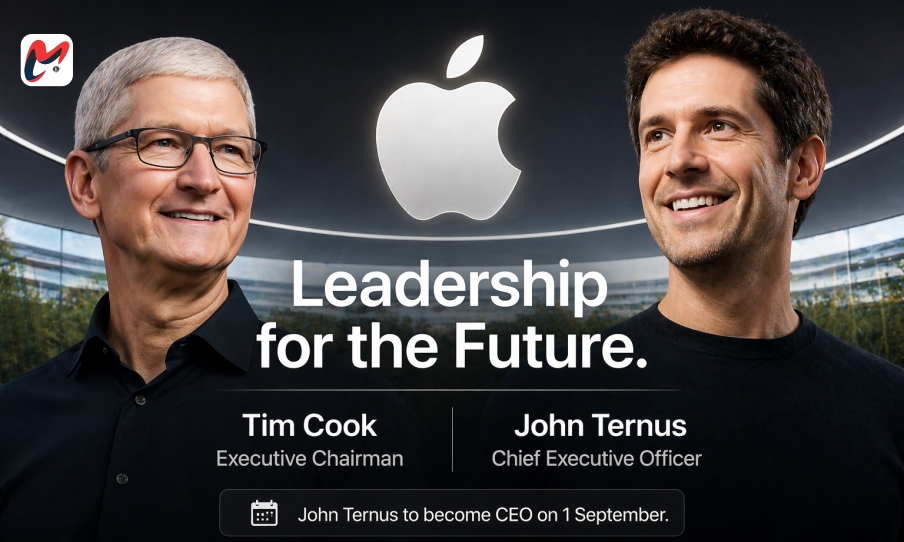
- John Ternus has become the new chief executive of Apple because the company selected him to replace Tim Cook, who had led the company for 15 years.
- Ternus will become the new CEO on September 1, while he currently serves as the head of hardware engineering, and Tim Cook will take on the role of executive chairman.
- Cook will guide the entire transition process throughout the summer while he continues to work with Apple as an advisor and policy engagement specialist.
- Apple achieved a $4 trillion valuation during Cook’s time as chief executive when the company developed into one of the most valuable businesses in the world.
- Ternus has worked at Apple for more than 25 years because he helped develop important products such as the iPhone, iPad, Apple Watch and Apple Silicon.
Key Takeaways
- The leadership change at Apple shows that the company is changing its business direction because they appointed a product-driven executive to lead the company.
- The legacy of Cook remains powerful because he expanded Apple’s international business operations which resulted in major profit and market value growth.
- Ternus hardware experience will drive Apple to develop new groundbreaking products through his expertise in hardware development.
- Apple shows excessive dependence on its primary product because the company depends on iPhone sales for its financial success.
- The leadership transition shows that the company will focus more on developing AI technology, wearable devices and other new technological advancements.
Core Background
The appointment of John Ternus as CEO by Apple started a big change in the company’s leadership, which ended Tim Cook’s time as CEO. Cook assumed control of Apple in 2011 after Steve Jobs left the company, and he built Apple into a worldwide market leader through his ability to execute operations and manage supply chains, and achieve steady financial growth. The Apple ecosystem grew during Cook’s time as CEO, and the company expanded its international presence.
The company achieved its first $1 trillion valuation when it led the organization to its first $1 trillion valuation and later the company reached a market value of $4 trillion. The critics of his work showed two main points about his strengths, which he accomplished at scale, but they claimed he lacked essential innovative ideas.
The company now assigns Ternus a different leadership role, which requires him to perform his duties. He served as the primary hardware executive at Apple, whose work included creating iPhone and iPad devices for various generations, launching AirPods and Apple Watch products, and developing Apple silicon as a replacement for Intel. Apple appointed him to his position because the company wants to concentrate its efforts on producing unique products through scientific research and engineering design development.
The transition arrives during an essential period. Apple needs to discover its upcoming business opportunity, which will help the company decrease its dependence on the iPhone. The artificial intelligence market sees Meta, Google, and Microsoft investing heavily in new generation systems and advanced technologies.
Apple has taken a more measured approach to AI, integrating technologies from partners like OpenAI rather than leading with its own ecosystem. With Ternus stepping in, the company signals a potential shift toward deeper integration of AI within its hardware and a renewed emphasis on innovation.
This leadership change represents more than succession—it marks a strategic inflection point. Apple now moves from an era defined by operational dominance to one that demands bold experimentation, faster iteration, and the creation of its next defining product category.