
Highlights
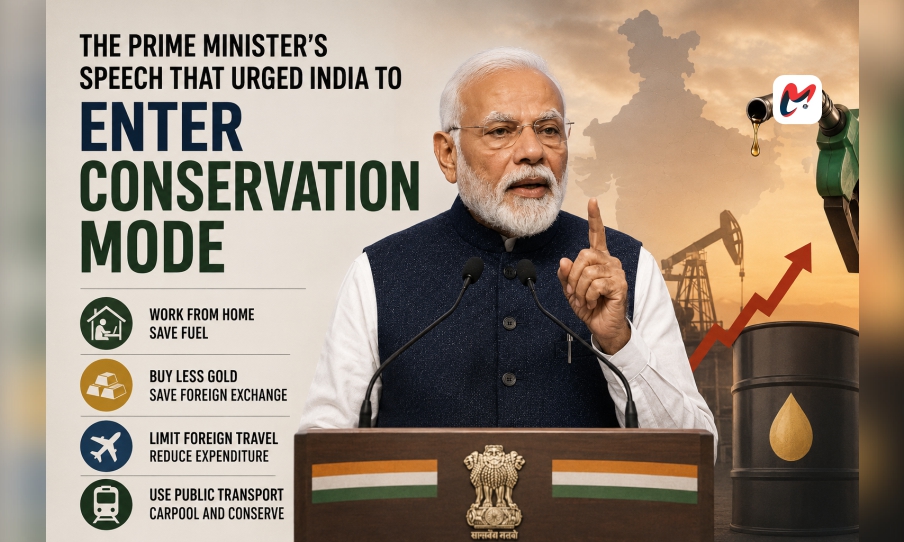
- Prime Minister Narendra Modi asked Indian citizens to practice budget-friendly spending by working remotely, decreasing their gold purchases, and restricting their international travel.
- The extended Middle East conflicts and the Strait of Hormuz shipping disruptions have caused a significant rise in India’s oil import costs.
- Modi asked citizens to adopt public transportation and carpooling together with decreasing their fuel use as a method to protect the nation’s foreign currency reserves.
- The financial markets experienced strong movements because investors feared an extended period of economic difficulties, which led to a major drop in the Sensex index.
- The international economic situation has become more concerning because of rising rupee pressure and inflation risks, together with industrial shutdowns.
Key Takeaways
- The Indian government established conservation measures to control rising energy costs, which resulted in an austerity shift in expenses.
- The Indian economy suffers a severe risk because the country depends entirely on imported crude oil for its energy needs.
- Rising energy expenses endanger various sectors, which include manufacturing and agriculture, and inflation and currency stability.
- Modi’s comments indicate that the government might introduce official energy conservation rules together with adjustments to fuel prices.
- The Middle East conflict creates economic changes that extend their impact beyond the region.
Core Background
Prime Minister Narendra Modi called on citizens to adopt more conservative spending and energy-use habits as India confronts a sharp rise in global fuel costs. His appeal reflects growing economic pressure, which Middle Eastern geopolitical conflicts have caused through their infliction of oil supply disruptions and energy price increases.
India depends on other countries for 90% of its crude oil needs, which creates economic risks during times when supply disruptions occur. The extended shutdown of the Strait of Hormuz, which serves as a vital route for international oil shipments, has resulted in higher import expenses and created difficulties with maintaining foreign currency reserves.
The Prime Minister proposed multiple practical solutions for reducing pressure on the system, which included working from home and decreasing unnecessary travel while promoting public transportation and carpooling. He also urged farmers to cut fertilizer usage, which showed his worry about increasing input costs and imminent threats to farming operations.
The economic impact has already spread across multiple sectors. Energy-intensive manufacturers must deal with operational challenges because their production facilities depend on limited fertilizer supplies, growing agricultural problems, and increasing food expenses. The Indian rupee has experienced significant depreciation, which results in higher import costs and creates additional inflation pressures.
Financial markets responded negatively because investors believed that economic growth would slow down after continuous interruptions. Political critics argued that the government should develop structural policy solutions instead of passing its responsibilities to the public.
India adopted a response that follows the pattern of other nations that faced identical economic challenges because their governments implemented measures to decrease fuel usage while safeguarding citizens and controlling economic consequences. India will transition from public appeals to official intervention methods because global uncertainty continues to rise.