Highlight
- Japan ended its longstanding arms export prohibition, which resulted in a significant change to its defense strategy.
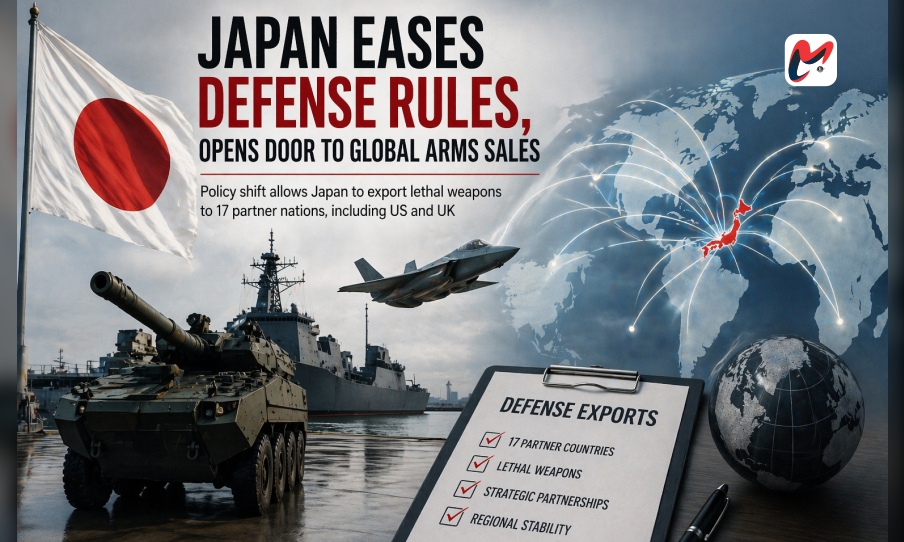
- The government now permits lethal weapon sales to 17 partner countries, which include the United States and the United Kingdom.
- Sanae Takaichi explained that the initiative had become vital due to increasing threats to regional security.
- The Chinese government issued statements that condemned the decision while warning about the dangers of what they described as “reckless militarization.”
- Japan increased its military capacity by participating in joint combat training with the United States and the Philippines.
Key Takeaways
- Japan shifts defense strategy: The country moves away from strict pacifism toward a more assertive security posture. The country now moves toward stronger military capabilities because it has stopped following its previous practice of absolute pacifism.
- Exports expand significantly: Japan enables arms sales beyond non-lethal categories because this move increases its role in global defense markets.
- Regional tensions escalate because China responds with extreme measures which show the increasing geopolitical conflicts that exist throughout East Asia.
- Alliances strengthen because Japan increases its military operations with the United States and other regional countries through deeper military ties.
- The debate over identity has expanded because Japanese policymakers and their opponents disagree about whether the country should change its existing pacifist system.
Core Background
Japan established its post-war national identity through pacifism after the country adopted its 1947 constitution, which both outlawed warfare and limited military strength. The country has maintained restrictions on arms exports for more than thirty years because it only permits non-lethal products which include rescue and surveillance and transport equipment.
The changing geopolitical environment required Japan to reevaluate its strategic stance. The Japanese prime minister Shinzo Abe approved military export collaboration with international partners in 2014 when he removed the complete military export ban. Fumio Kishida became the first Japanese leader to authorize finished weapon exports since World War II.
Sanae Takaichi leads Japan in its rapid development toward this new direction. The government permits more arms exports to other nations, yet it officially prohibits sales to nations that fight wars except when special conditions apply. Officials believe that increasing defense capabilities through partnerships will create better results for regional stability.
Japan has expanded its military activities even while it maintains its current level of military operations. The Self-Defense Forces of Japan now conduct active combat operations during joint military exercises with the United States and the Philippines, which marks a new milestone that shows increased military collaboration between the two nations.
The shift unfolds amid rising tensions with China, particularly over disputed territories and Taiwan. China continues to assert its claim over Taiwan and has not ruled out military action, which creates concern for regional powers. South Korea has asked Japan to establish a new defense strategy while maintaining its historical peace commitments, which stem from 20th-century historical concerns.
Supporters argue that Japan must adapt to a rapidly changing security environment which present itself through regional threats that come from China Russia and North Korea. Critics, however, warn that expanding military capabilities and revising constitutional principles—particularly Article 9—could draw Japan into future conflicts.
Japan exists at a strategic turning point because it currently builds a new national identity that transforms its status from a passive nation into a dedicated security partner for the unstable area.