Highlights
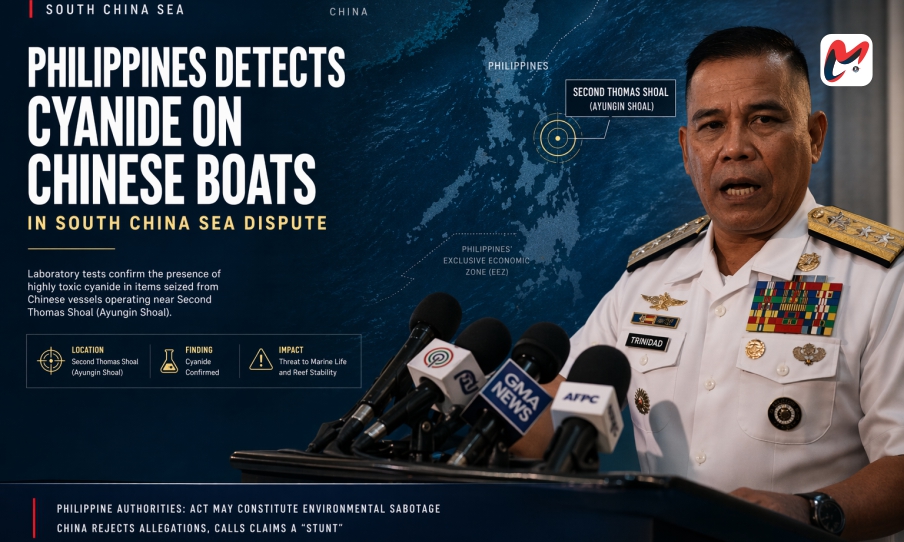
- The Philippines found cyanide traces on Chinese vessels that operated close to the contested Second Thomas Shoal area in the South China Sea.
- The Philippine authorities confirmed the presence of toxic substances through laboratory testing of materials that they had confiscated during their naval operations.
- Officials warned that cyanide use would harm marine ecosystems while destroying the reef, which supports a grounded Philippine military ship.
- The Philippine government labeled the act as intentional sabotage, which targeted fish resources and regional security.
- China rejected the allegations while accusing the Philippines of staging the accusations.
Key Takeaways
- Environmental risk escalates: Cyanide poses a threat to marine life and reef ecosystems in a highly delicate marine environment.
- Geopolitical tensions intensify: The incident deepens friction between the Philippines and China in contested waters.
- Competing narratives persist: Both nations continue to challenge each other’s claims and actions in the region.
- Strategic stakes remain high: The atoll supports a grounded warship that reinforces the Philippines’ maritime claim.
- Regional security remains fragile: Ongoing dialogue fails to resolve South China Sea disputes, which continue to impact economic and military matters.
Core Background
The Philippines maintains its territorial claim over Second Thomas Shoal, which sits inside its exclusive economic zone. The country established its military presence through atoll operations, which began when it deployed a military ship to the location. The South China Sea conflict between China and the Philippines has intensified because both sides have increased their military operations in the region.
The Philippines has accused China multiple times of preventing its ships from delivering supplies to soldiers on board the ship. Still, this accusation includes a 2024 incident, which resulted in a Filipino sailor sustaining injuries. China has denied these allegations and maintains that Philippine forces operate within its claimed territory.
The two countries conducted diplomatic talks to establish better relations while they studied ways to develop their energy resources and to create better contact between their coast guard teams. The Philippines stated that the countries would work together to develop limited cooperation, which would not include their military secret operations.
China maintains its sovereignty over most of the South China Sea, which conflicts with territorial demands from Brunei, Malaysia, Vietnam, and Taiwan. The 2016 international arbitral ruling declared that China lost its broad territorial claims due to international law, but China has refused to accept the ruling. The South China Sea serves as an essential international shipping channel, which handles more than 3 trillion dollars of trade each year. Territorial disputes in the region create economic impacts that extend to international financial markets and security situations in the area.