
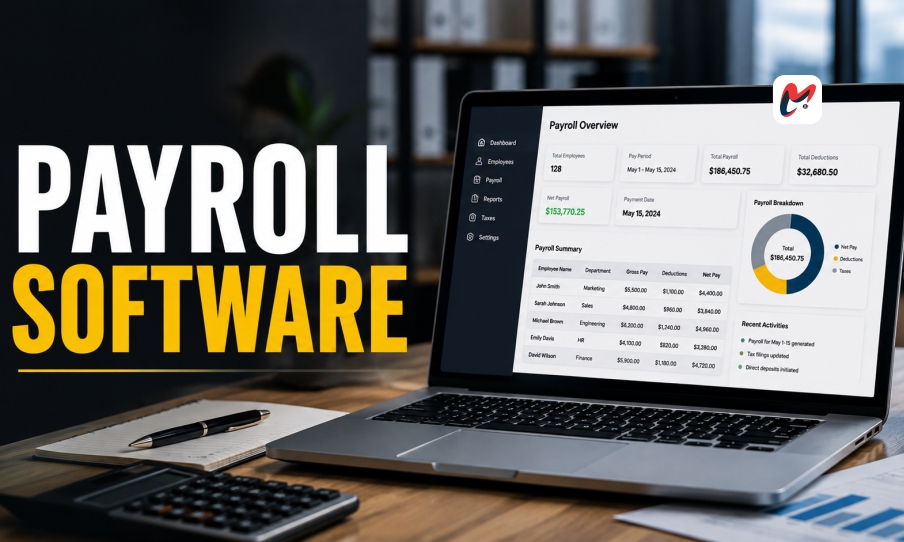
Managing salaries, deductions, and other aspects of payroll can become a challenging task, especially as a company grows and begins to acquire more employees. Payroll software can ease the burden of processing payments and reducing errors that could occur otherwise. It is a crucial business tool that helps organizations keep track of everything related to their employees’ payments, including taxes, bonuses, reimbursements, and other relevant data. Thus, businesses should consider investing in such software to make the process more efficient and less error-prone.
The Necessity of Payroll Software for Businesses
With a growing number of employees, it can become difficult for businesses to handle payroll processes on their own. It is essential to ensure that everyone is paid the correct amount on time while also adhering to tax regulations. These tasks can take a lot of time and effort, especially if they are done manually. In addition, errors are inevitable, which could lead to underpayment or overpayment of some workers. This is why automated payroll software is a necessity for any organization, regardless of its size.
Using such systems makes the process much easier, as they handle most calculations and paperwork, leaving less work for the HR department. At the same time, these programs can help reduce the possibility of mistakes and ensure that everyone is compensated correctly. Finally, automated payroll software can help both workers and businesses by providing the former with easy access to the necessary documents and information. In turn, this makes employees more confident about the accuracy of their payroll and allows the HR department to focus on more important tasks without having to spend time answering questions about salaries.
Key Features of Payroll Software
Modern payroll software comes with a wide range of features designed to simplify payroll management. Automatic salary calculations eliminate manual errors, while built-in tax compliance ensures deductions and filings remain accurate according to the latest regulations. Attendance and leave management integration helps calculate salaries based on actual working days without requiring separate manual entries.
Many payroll platforms also offer employee self-service portals where staff can download payslips, update personal information, and view tax details. Direct bank transfer integration further speeds up salary disbursement, making the payment process faster and more secure. Cloud-based accessibility allows HR professionals and business owners to manage payroll from virtually anywhere while ensuring data remains protected with advanced security measures.
Benefits of Using Payroll Software
Implementing payroll software offers several advantages beyond simply processing employee salaries. One of the biggest benefits is increased accuracy. Automated calculations reduce the possibility of human error, ensuring employees receive the correct salary every payroll cycle.
Time savings are another significant advantage. Payroll that previously required several days can often be completed within a few hours. Businesses also experience improved compliance because the software automatically updates tax rules and statutory regulations, reducing the risk of penalties.
Another important benefit is enhanced reporting capabilities. Payroll reports provide valuable insights into salary expenses, tax liabilities, overtime costs, and employee compensation trends. These reports support better financial planning and informed decision-making. As businesses expand, scalable payroll solutions can accommodate a growing workforce without increasing administrative complexity.
Choosing the Right Payroll Software
Selecting the ideal payroll software depends on the size of your organization, budget, and operational requirements. Businesses should evaluate whether the software offers automation, tax compliance support, attendance integration, customizable reports, and user-friendly navigation. Cloud-based systems are becoming increasingly popular because they provide flexibility, automatic updates, and secure data storage.
Integration with existing HR, accounting, and attendance systems should also be considered to avoid duplicate data entry. Reliable customer support, regular software updates, and strong security standards are equally important when making a decision. Reading customer reviews and requesting product demonstrations can help businesses identify a solution that best matches their needs.
The Future of Payroll Software
Technology continues to transform payroll management, making payroll software more intelligent and efficient than ever before. Artificial intelligence and machine learning are being integrated into payroll systems to automate repetitive tasks, identify anomalies, and improve payroll accuracy. Businesses are also adopting mobile payroll applications that enable managers and employees to access payroll information from smartphones and tablets.
Cloud computing has further revolutionized payroll processing by enabling real-time collaboration, automatic backups, and seamless software updates. Advanced analytics provide organizations with deeper insights into workforce costs and compensation strategies, helping businesses make data-driven decisions.
As remote and hybrid work models become more common, payroll systems are evolving to handle employees working across different locations while maintaining compliance with varying tax and labor regulations. This adaptability makes payroll technology an essential investment for businesses preparing for future workforce challenges.
Conclusion
Efficient payroll management plays a crucial role in maintaining employee trust, regulatory compliance, and smooth business operations. Investing in reliable payroll software helps organizations eliminate manual errors, automate complex calculations, and improve overall productivity. From accurate salary processing and tax compliance to employee self-service and insightful reporting, modern payroll solutions deliver measurable value across every stage of payroll management. As businesses continue to embrace digital transformation, adopting the right payroll software will remain a strategic decision that supports long-term growth, operational efficiency, and employee satisfaction.