Highlights
- A rare artwork by Pablo Picasso sold for just €100 through a global raffle.
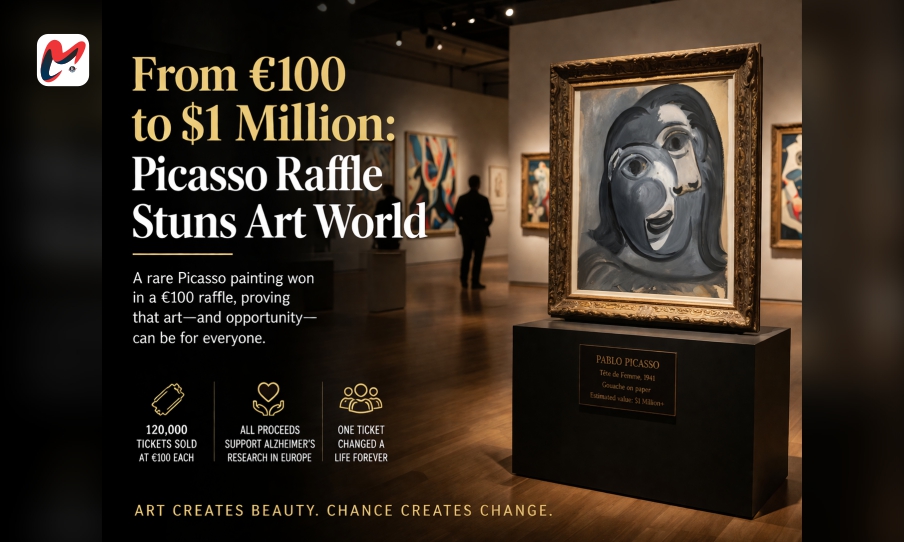
- Ari Hodara from Paris won the 1941 painting Tête de Femme by using one ticket.
- Organizers released 120,000 tickets, which produced all the income for Alzheimer’s research throughout Europe.
- The painting holds an estimated value above $1 million, which makes the victory extremely important.
- The initiative combined art ownership with philanthropy to provide people access to valuable art acquisitions.
Key Takeaways
- A rare artwork by Pablo Picasso sold for just €100 through a global raffle.
- Ari Hodara from Paris won the 1941 painting Tête de Femme by using one ticket.
- Organizers released 120,000 tickets, which produced all the income for Alzheimer’s research throughout Europe.
- The painting holds an estimated value above $1 million, which makes the victory extremely important.
- The initiative combined art ownership with philanthropy to provide people access to valuable art acquisitions.
Core Background
The organizers of the “1 Picasso for 100 euros” initiative designed this program to connect art with accessibility while supporting charitable causes.
The program provided participants with an exceptional opportunity to acquire an authentic Pablo Picasso painting, who stands as one of the most important artists of modern art history.
The campaign showcased Tête de Femme (1941), which Picasso painted during his time in German-occupied Paris through his World War II-era gouache work. The artwork displays his distinctive Cubist style, which shows a female figure through twisted shapes and dull colors that show her deep thinking state and strong emotional power.
Ari Hodara, who lives in Paris as a software expert and art aficionado, bought the winning ticket that allowed him to acquire the artwork. The artwork surprised him because his previous knowledge of Picasso’s artistic style came from museum visits.
The raffle organizers worked with Christie’s to conduct the raffle, which established their trustworthiness and allowed them to reach international audiences. The organization maintains its history of charitable work through its previous campaigns, which financed heritage protection in Lebanon and provided clean water and hygiene solutions during the pandemic.
Picasso’s family, which included Olivier Widmaier Picasso, supported the initiative because Picasso’s family commitment shows Picasso’s willingness to experiment with new artistic concepts.
Picasso’s artworks have previously set auction record prices, with Les Femmes d’Alger (Version “O”) becoming his most expensive work when it sold for more than $179 million.
The raffle model creates a complete transformation because it changes how people experienced exclusive art ownership. The initiative combines cultural value with social benefits to create a new way for audiences to connect with high art because they experience masterpieces as both objects for appreciation and tools for shared community value.