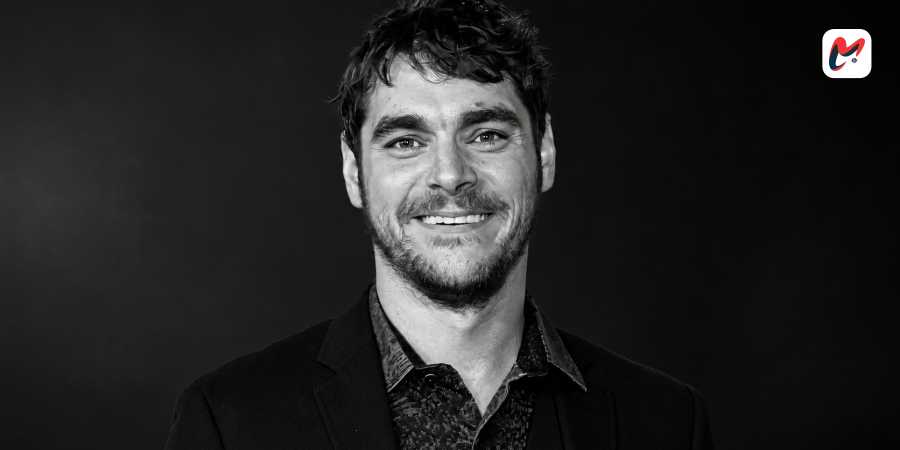
Some actors become known for a character. Others use the opportunities that follow a successful role to change how audiences see people whose experiences are rarely represented on screen. RJ Mitte accomplished both. Best known for playing Walter “Flynn” White Jr. in the acclaimed television drama Breaking Bad, he brought authenticity to a character whose disability was part of his life but never the entirety of his identity. His work later extended into film, modeling, production, and disability advocacy, giving his career a significance beyond a single television series.
Mitte died on October 12, 2026, at the age of 34, according to reports from Reuters and other major news organizations. His death brought renewed attention to a career that began when he was a teenager and to the advocacy work he pursued alongside acting. His story remains a reminder of the value of representation, the demands of growing up in public, and the difference one performer can make by challenging familiar assumptions.
Early Life and the Road to Acting
Born on August 21, 1992, in Jackson, Mississippi, Mitte was diagnosed with cerebral palsy at the age of three following brain damage sustained at birth. His childhood included physical therapy, mobility challenges, and experiences of bullying. Rather than allowing those experiences to define his ambitions, he continued exploring opportunities that would eventually take him into entertainment.
His family moved to Los Angeles in 2006, opening the door to acting auditions and early television work. Before his breakthrough, Mitte appeared in smaller roles and gained experience on productions including Hannah Montana and Everybody Hates Chris. These opportunities gave him a practical introduction to the industry, from working on a set to understanding how performances are developed for television.
The decisive opportunity arrived when he auditioned for Breaking Bad. Mitte was around 14 when he began working on the series, which premiered in 2008. His casting placed him in a production that would become one of the most influential television dramas of its era.
How Breaking Bad Changed His Career
In Breaking Bad, Mitte played Walter White Jr., the teenage son of chemistry teacher Walter White, portrayed by Bryan Cranston. As Walter’s life becomes entangled with the illegal drug trade, the consequences reach far beyond his criminal activities. His family relationships deteriorate, and his son becomes an important emotional counterpoint to his father’s transformation.
The role had a distinctive personal connection for Mitte because he also lived with cerebral palsy. The character’s condition was portrayed as more pronounced than Mitte’s own experience, requiring him to adapt his movements and speech for the part. This allowed the performance to reflect the character’s circumstances while drawing on the actor’s familiarity with disability.
What made Walter White Jr. memorable was not simply the authenticity of the physical portrayal. The character had his own frustrations, loyalties, and sense of right and wrong. As the series progressed, his growing awareness of his father’s actions gave the family story much of its emotional force.
Breaking Bad ran for five seasons, concluding in 2013, and Mitte appeared throughout the series. Its international success gave him a lasting association with one of television’s most recognizable dramas. Yet the role also created a challenge common to actors who become closely identified with a celebrated character: finding subsequent projects that allow audiences to see a wider range of their abilities.
Career Beyond Walter White Jr.
After Breaking Bad, Mitte continued working across television and film rather than relying entirely on his established reputation. He appeared in the family drama Switched at Birth, playing Campbell Bing, a college student who uses a wheelchair following a snowboarding accident. The role offered another opportunity to portray a disabled character whose interests and ambitions extended beyond his physical circumstances.
His film credits included Standing Up for Sunny, Triumph, and The Guardians of Justice. In the 2021 film Triumph, he played a high school wrestler with cerebral palsy, a part that connected closely with his experience while placing him in a different dramatic setting. He also pursued modeling and public speaking, demonstrating that his professional interests reached beyond conventional acting roles.
For RJ Mitte, the challenge was never simply to find another character who resembled Walter White Jr. It was to continue working in an industry where disability has historically limited the kinds of roles offered to performers. His career contributed to a broader discussion about casting disabled actors in stories that reflect both their lived experiences and the full range of human relationships.
His later work also included the film Talking to Strangers, which he was promoting shortly before his death. The project was among the most recent examples of his continuing involvement in entertainment.
Advocacy and Disability Representation
Acting gave Mitte a platform, but he used that visibility to address issues affecting people with disabilities. He worked with organizations including United Cerebral Palsy and Shriners Children’s, and he served as a spokesperson for disability inclusion initiatives. He also became president of the Mitte Foundation, which focused on improving quality of life and supporting educational opportunities in Central Texas.
His advocacy addressed a problem that extends beyond television: disabled people are often portrayed through narrow narratives of dependence, tragedy, or extraordinary achievement. Such stories can overlook the ordinary ambitions, relationships, disagreements, and professional interests that shape people’s lives.
Mitte’s own career offered a different perspective. His disability was relevant to his experiences, but it did not prevent him from pursuing acting, modeling, public appearances, and philanthropic work. He also spoke about the importance of seeing disabled performers in mainstream entertainment, where audiences could encounter them as fully developed characters rather than as symbols of a particular issue.
That distinction remains important. Better representation involves more than including a disabled character in a script. It also means giving disabled actors opportunities to perform varied roles and participate in an industry that reflects a wider range of experiences.
The Legacy RJ Mitte Leaves Behind
The significance of Mitte’s career lies in the combination of memorable acting and sustained advocacy. Walter White Jr. introduced him to a global audience, but his subsequent work showed that his interests extended well beyond one character. He continued seeking roles, participating in public conversations about disability, and supporting organizations focused on inclusion and education.
His story also highlights a broader responsibility for the entertainment industry. Visibility matters, but it is only one part of meaningful change. Disabled performers need opportunities to work consistently, develop their craft, and be considered for characters whose stories are not defined exclusively by disability.
RJ Mitte’s journey from a young actor on Breaking Bad to a performer and advocate left a lasting mark on those conversations. His life and work will be remembered not only for a celebrated television role, but also for the way he used his public platform to question narrow ideas about ability and opportunity. His career remains a meaningful part of television history and of the continuing effort to make entertainment more representative of the people who watch it.